NIL and the right of publicity regulations - how to make compliant NIL payments across industries

The right of publicity is the umbrella term that covers one’s legal right to control the commercial use of their name, image, and likeness. The term NIL (Name, Image & Likeness), however, gained mainstream momentum in 2021 when the NCAA (the National Collegiate Athletic Association) reversed a longstanding policy and allowed college athletes to monetize their identity.
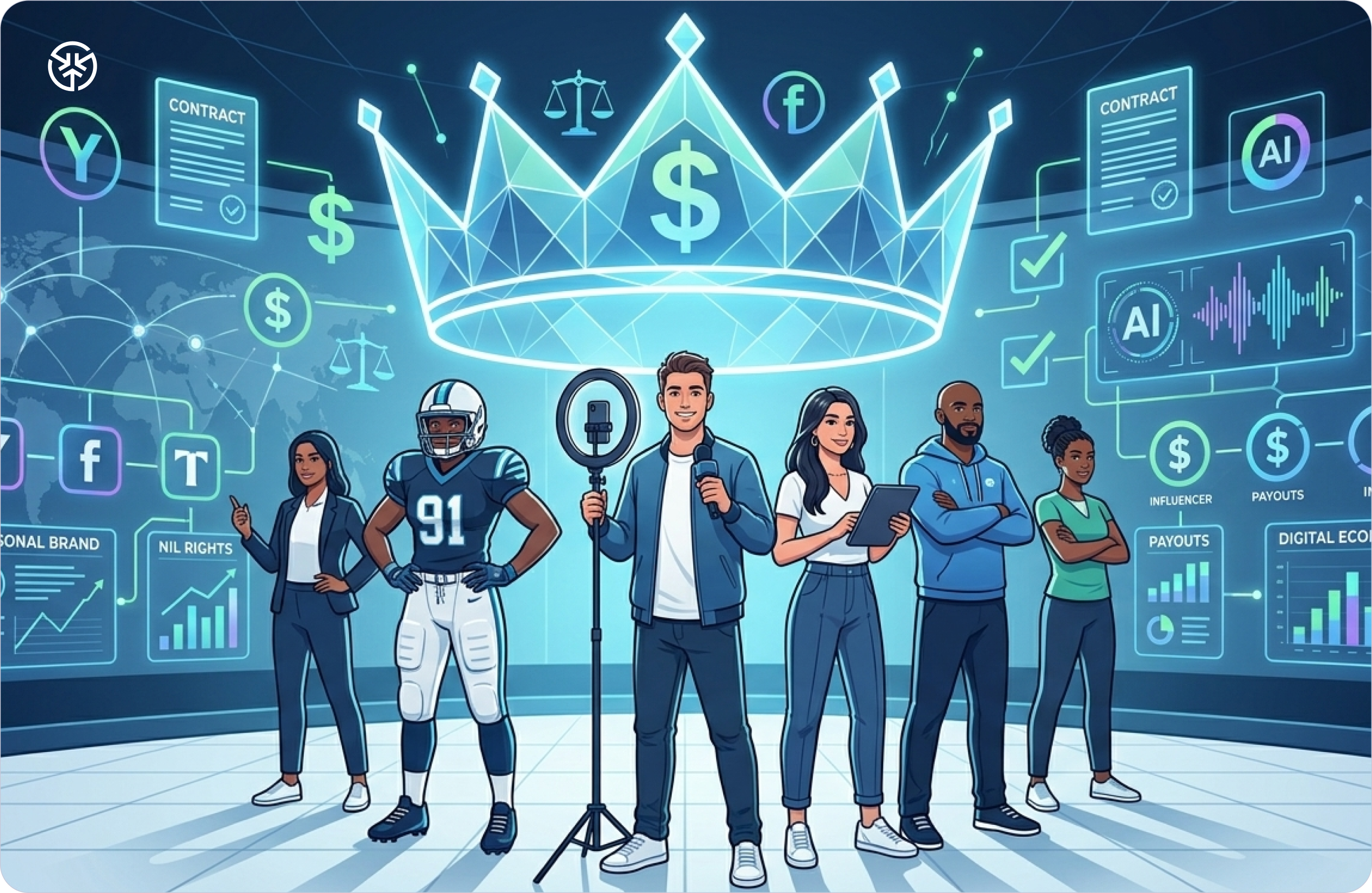
Since then, NIL has outgrown its origins and now functions as the shorthand for the broader commercialization of one’s identity, including things like brand deals, sponsored content, appearance fees, licensing, and increasingly, the fight against AI systems that replicate faces and voices without consent. If your identity is generating commercial value, NIL is the framework that governs it.
In just a few years, NIL went from a niche term to a multibillion-dollar industry, accelerated by the simultaneous explosion of the creator economy. The rulebook is still being written. There is no federal NIL statute, right of publicity protections vary dramatically by state, and AI introduces questions the law is only starting to consider.
This guide covers the full picture - the legal foundation, the U.S. and international regulatory landscape, how deals are structured and taxed, and what businesses need to do to stay compliant when making NIL payments to anyone whose name, image, or likeness is used commercially.
In this article we'll cover:- What is NIL and how it’s governed
- NIL vs. copyright vs. trademark
- Sources of NIL income
- The NCAA NIL context
- The role of NIL collectives
- NIL for creators and influencers
- U.S. legal landscape
- Global NIL regulations
- Platform monetization terms
- NIL vs AI
- How NIL payments are structured
- Tax treatment of NIL income
- Compliance mistakes and penalties
What is NIL and how it’s governed
NIL stands for Name, Image, and Likeness, and while the term entered mainstream use through college sports, the legal basis for it is older and broader. The right of publicity is the right of any person to control how their identity is used for commercial purposes - their name, visual likeness, voice, and in some jurisdictions other attributes like their signature.
NIL and right of publicity refer to a personality right, not an intellectual property right, which means it protects the person themselves rather than anything they created or own. In the U.S., it exists at the state level, and the scope of protections varies significantly depending on where you are.
NIL vs. copyright vs. trademark
Unlike copyright and trademark, NIL and right of publicity protect a person’s identity, rather than a brand identifier or a creative work.
Copyright protects original creative works and belongs to the creator of that work. A photograph or a video featuring an individual belongs to the brand that commissioned it. But that ownership doesn’t extend to the likeness of the people in it. Using that content in an advertisement requires a separate right of publicity release from every identifiable person, regardless of who owns the copyright. This is one of the most commonly missed compliance gaps in content production.
Trademark protects brand identifiers like names, logos, and slogans used in commerce. A person can also trademark their name or catchphrase to layer protection on top of their right of publicity. But trademark requires registration and active commercial use to maintain, while the right of publicity applies to a person automatically.
Sources of NIL income
NIL income spans a wide range of activities where your identity is used commercially, and the legal and tax obligations that come with it apply regardless of the deal size or format.
- Sponsored content and brand deals - brands pay to promote their content in any form, on social media, in newsletters, on podcasts, etc.
- Endorsements and licensing - a brand uses your name or likeness in their advertising or on their product. Typically happens under a longer-term agreement defining how and where your identity can be used.
- Appearances and speaking fees - you get paid to show up somewhere as yourself and take part in an event.
- Autographs and memorabilia - signing events, authenticated merchandise, and collectibles are most common in sports but not exclusive.
- Merchandise and digital products - selling branded products, courses, or content under your name.
- Affiliate marketing - earning commission on sales driven through your personal brand and reach.
- Gifts - brands send products with an expectation of coverage which constitutes compensation even without cash changing hands.
Each of these activities triggers its own set of tax obligations, disclosures, and contractual compliance.
The NCAA NIL context
For most of its history, the NCAA prohibited college athletes from earning any money from their name, image, or likeness as a condition of eligibility to compete. Basically, athletes had to waive their right of publicity to be able to compete.
That changed in 2021 when the Supreme Court ruled in NCAA v. Alston that this restriction violated antitrust law. Athletes could now sign brand deals, collect appearance fees, run their own businesses, and monetize their social media without losing eligibility.
In 2024, the House v. NCAA settlement went further, allowing schools to directly share revenue with athletes, setting a ceiling per school at $20 million per year. One foundational rule remains - NIL deals with schools can’t be a payment for athletic performance and must be grounded in actual commercial activity. The broader question of whether college athletes should be classified as employees remains actively contested.
NIL vs. NCAA revenue share
NIL and NCAA revenue share are often conflated, but they are structurally and legally distinct.
NIL refers to third-party compensation tied to the commercial use of an athlete’s name, image, or likeness. These deals must reflect a legitimate business purpose, meaning payment is tied to real deliverables such as content, appearances, or endorsements.
Revenue share, by contrast, refers to direct payments from schools to athletes under the post-settlement model. This is institutional compensation, not dependent on external commercial activity, and operates under a separate regulatory framework.
The distinction extends to reporting and compliance infrastructure:
- NIL activity is reported through NIL Go, which tracks third-party deals and disclosure requirements.
- Revenue share payments are reported through CAPS, the system used for institutional financial reporting and compliance.
Confusing the two creates real compliance risk. NIL must reflect fair market value for services rendered, while revenue share is governed by institutional limits and allocation rules. They are reviewed differently, reported differently, and enforced differently.
Payment Labs payment infrastructure allows schools to automate both these payment types in full compliance with NCAA regulations.
The role of NIL collectives in college athletics
Before schools could pay athletes directly, alumni and donors formed formally independent organizations to route money to athletes through structured NIL deals. These collectives became a powerful recruiting tool, effectively guaranteeing athletes income, creating a direct contradiction to the NCAA’s prohibition of using NIL to induce recruitment.
When schools were allowed to pay athletes directly, collectives repositioned as something closer to talent agencies, managing athlete deals on top of what schools pay. The rules governing collectives remain largely undefined, but regardless, the NCAA has very little power to enforce its own rules.
NIL for creators, influencers, and gig workers
The creator economy has operated on NIL principles for years without calling it that. Any time a brand pays someone to use their name, face, or following to promote a product, that’s a NIL transaction even if it doesn’t say so in the contract.
Unlike college athletes, however, creators have no governing body reviewing deals, no eligibility requirement, or institutional guardrails. In the U.S., they do answer to the Federal Trade Commission (FTC) which requires disclosure of a material connection to a brand you promote. This applies regardless of platform or audience size and is one of the most routinely ignored compliance obligations in the creator space. It is important to note that the FTC has been increasingly willing to enforce fines and other actions against both creators and the brands behind them.
The U.S. legal landscape of NIL
No federal NIL law exists in the United States. There is a patchwork of state laws, each with different definitions, protections, and enforcement. For example:
- California has the broadest protection covering name, voice, signature, photograph, and likeness that extends rights 70 years after death. Many other states look to California’s experience while developing their own regulatory frameworks.
- New York recently overhauled the right of publicity statute to cover digital replicas and AI-generated likenesses.
- Tennessee was the first to pass a law specifically prohibiting AI voice cloning without consent.
The FTC governs how NIL relationships must be disclosed to the public. The guidelines require anyone promoting a brand regardless of platform or audience size to disclose any material connection between a creator or athlete and a brand they promote, including payments, gifts, equity, and discounts.
The pressure to create a federal NIL standard is growing but none of the introduced bills have passed, largely due to the First Amendment tensions between personality rights protection and protected expression.
Global NIL regulations
There is no international right of publicity framework and every jurisdiction handles it differently. When a brand runs a global campaign, the law of the jurisdiction where the harm occurs generally governs. But practically, it’s difficult to enforce NIL rights across borders.
The European Union is an exception, with the most far-reaching and comprehensive set of rules that affect NIL activity.
The first is GDPR which treats a person’s identifying attributes as personal data, meaning any commercial use requires explicit consent. Violations can carry fines of up to 4% of annual revenue.
The EU AI Act goes further and regulates the use of AI-generated media, prohibiting some uses of deepfakes and voice cloning without consent. Both frameworks apply to any brand targeting EU users, regardless of where the brand is based.
How global platforms handle NIL in their creator monetization terms
When a creator agrees to a platform’s terms of service, they grant a license broad enough to cover most NIL use cases. For example:
- YouTube requires sponsored content disclosure but grants itself a license over uploaded content including AI training use.
- TikTok requires disclosure of branded content and also permits the platform to generate AI avatars and clone voices from uploaded content.
- Meta grants itself one of the broadest content licenses of any major platform, covering uses of a creator’s likeness that would otherwise constitute a NIL violation in a majority of states.
This pattern is consistent - creators are required to disclose brand relations per FTC guidelines and platforms retain the right to reuse content uploaded to them as they see fit.
The NIL vs. AI fight
Numerous AI tools can replicate a person’s voice, face, and mannerisms at commercial quality for a variety of purposes. This created a temptation for brands to generate synthetic versions of athletes or creators endorsing their product without ever contacting them, for studios to create versions of deceased actors for new productions, and companies to clone musicians’ voices for ad campaigns. Most of this happens in a legal gray area despite raising serious ethical concerns.
The right of publicity law wasn’t designed to address synthetic generation and whether an AI-generated voice or likeness constitutes use of a person’s identity is still being litigated in most jurisdictions.
The entertainment industry has been fighting this most vocally. During the 2023 strikes, unions negotiated the first formal consent and compensation framework for digital replicas of performers used to train AI models or generate synthetic performances. Now other industries are looking to replicate the framework but the infrastructure to do so varies significantly across industries.
Some states are moving faster than others. For example, Tennessee’s ELVIS Act was the first law specifically prohibiting AI voice cloning without consent. California’s law requires explicit consent before an AI replica of one’s voice can be used commercially, and New York has expanded its digital replica protections.
The EU AI Act requires transparency and consent for synthetic media targeting EU users. It covers deepfakes and AI-generated media depicting real people, and operates in parallel with GDPR to create the most comprehensive NIL protection framework anywhere in the world. Individual states and regions are moving quickly but for now creators and athletes are only protected in a few places.
How NIL payments are structured
NIL deals come in several forms which determine the tax treatment, compliance obligations, and legal protections on both sides.
NIL deal types
- Flat fee - a one-time payment for a specific deliverable.
- Retainer - a recurring monthly payment for ongoing association, content, or availability.
- Revenue share - the creator or athlete earns a percentage of sales they drive.
- Equity - an ownership stake in the brand instead of or alongside money.
- Gifts - non-cash compensation in the form of product or services, which carries the same tax and disclosure obligations as cash.
NIL contract must-haves
- Scope of rights - exactly what the brand can use, on which platforms, in which markets, and for how long.
- Exclusivity - whether a person is prohibited from working with competing brands.
- Deliverables and approval rights - what content is required, on what timeline, and who has final approval before it goes live.
- Morality clause - the right to terminate the agreement if the person’s or brand’s public image becomes reputationally damaging.
- Kill switch - the ability to remove content from circulation if the relationship ends and terms are violated.
- AI clause - explicit prohibition on using the person’s content, voice, or likeness to train AI models or generate synthetic media.
NIL payment mechanics
- Direct payment - brand pays the individual directly.
- Agent or manager payment - routes payment through a representative who adds a layer of contract oversight and negotiation.
- Entity structuring - high-income creators and athletes often receive NIL income through a legal entity rather than personally to manage tax liability and create cleaner accounting.
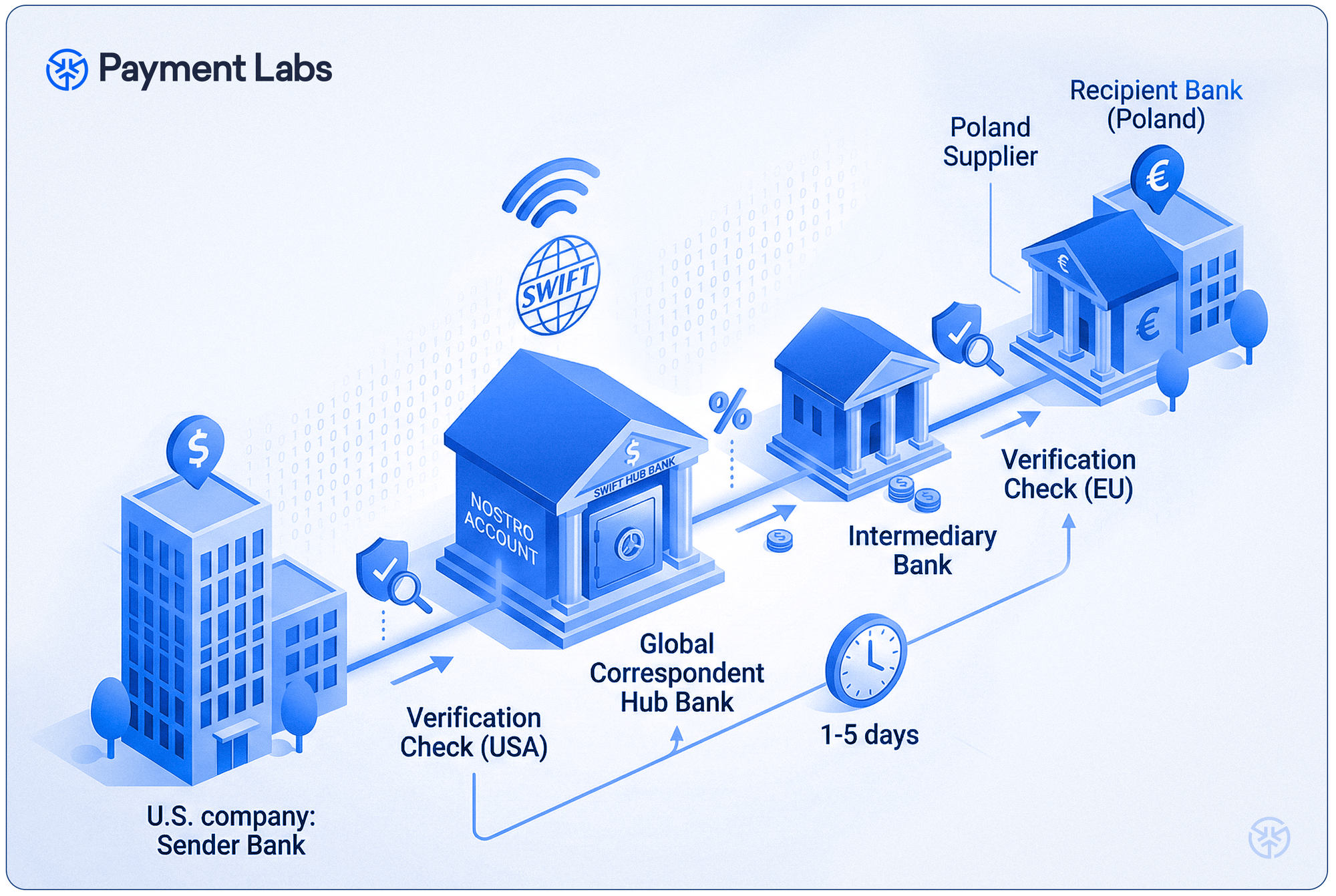
- International payments - cross-border deals introduce currency conversion, withholding tax obligations, and compliance requirements.
Tax treatment of NIL income
All NIL income is taxable, regardless of the form it takes or what it was called in the contract. Most NIL earners are classified as contractors, which means that no tax is withheld by the payor and the tax obligation is entirely up to the payee. This includes both income tax and self-employment tax (15.3%).
NIL earners are generally required by the IRS to make quarterly estimated tax payments throughout the year. The contractor classification also allows deductions for travel, equipment, software, agent fees, and other business expenses that reduce taxable income.
Any business paying $600 or more to an individual for NIL services in a year is required to issue a 1099 or a 1042-S form. For that, businesses should collect a completed form W-9 or W-8BEN for foreigners.
NIL income earned in multiple states triggers tax obligations in each of those states. An athlete or a creator who worked in 10 states is required to file taxes in all of them.
When a U.S. brand pays a foreign creator, a 30% federal withholding tax applies to the gross payment by default, unless a tax treaty with the creator’s country of residence says otherwise. Foreign payees should provide a completed form W-8BEN before a payment is made. Paying international creators without this creates liability for the business, not just the creator.
Common NIL compliance mistakes and penalties
NIL compliance failures are largely avoidable with basic processes in place and an understanding of regulations on the part of the business and the NIL earner.
Mistakes businesses make:
- Not collecting and verifying tax forms before payment
- Misclassifying non-cash compensation
- Using content beyond agreed-upon scope
- Assuming copyright ownership covers everyone in the content
- Using NIL as college recruitment inducement
Mistakes earners make:
- Missing quarterly estimated payments
- Not tracking business expenses
- Signing without reading exclusivity clauses
- Not disclosing sponsored content
- Not tracking income by state
- Assuming platform terms are harmless
Possible NIL penalties:
- IRS underpayment penalty - calculated on the amount owed and the duration of underpayment.
- FTC fines can reach up to $50,120 per violation.
- Right of publicity damages for unauthorized commercial use of their identity depend on the state.
- NCAA consequences - eligibility loss for athletes who violate NIL rules with potential penalties on the institution.
- State tax penalties - failure to file in states where NIL income is earned triggers late filing penalties and interest on unpaid tax.
Final thoughts
NIL gained prominence on the back of NCAA college athlete revenue sharing changes, but the same logic applies to creators, influencers, and gig workers across industries. Any time a person’s name, image, or likeness generates commercial value, the right of publicity framework governs it.
The rules are incomplete and vary significantly depending on where you are. There is no federal NIL standard, no global framework, and no settled legal answer for how AI-generated likenesses should be treated. But the global trend toward regulation is clear, and organizations need to be ready to operate within a more structured framework.
Payment Labs provides end-to-end payment infrastructure for NCAA programs and any other NIL use case handling the operational and compliance complexity that comes with paying talent at scale. The solution handles
- W-9 and W-8BEN collection and verification
- 1099 and 1042 end-of-year filing
- Cross-border payments in 150+ currencies across 180+ countries
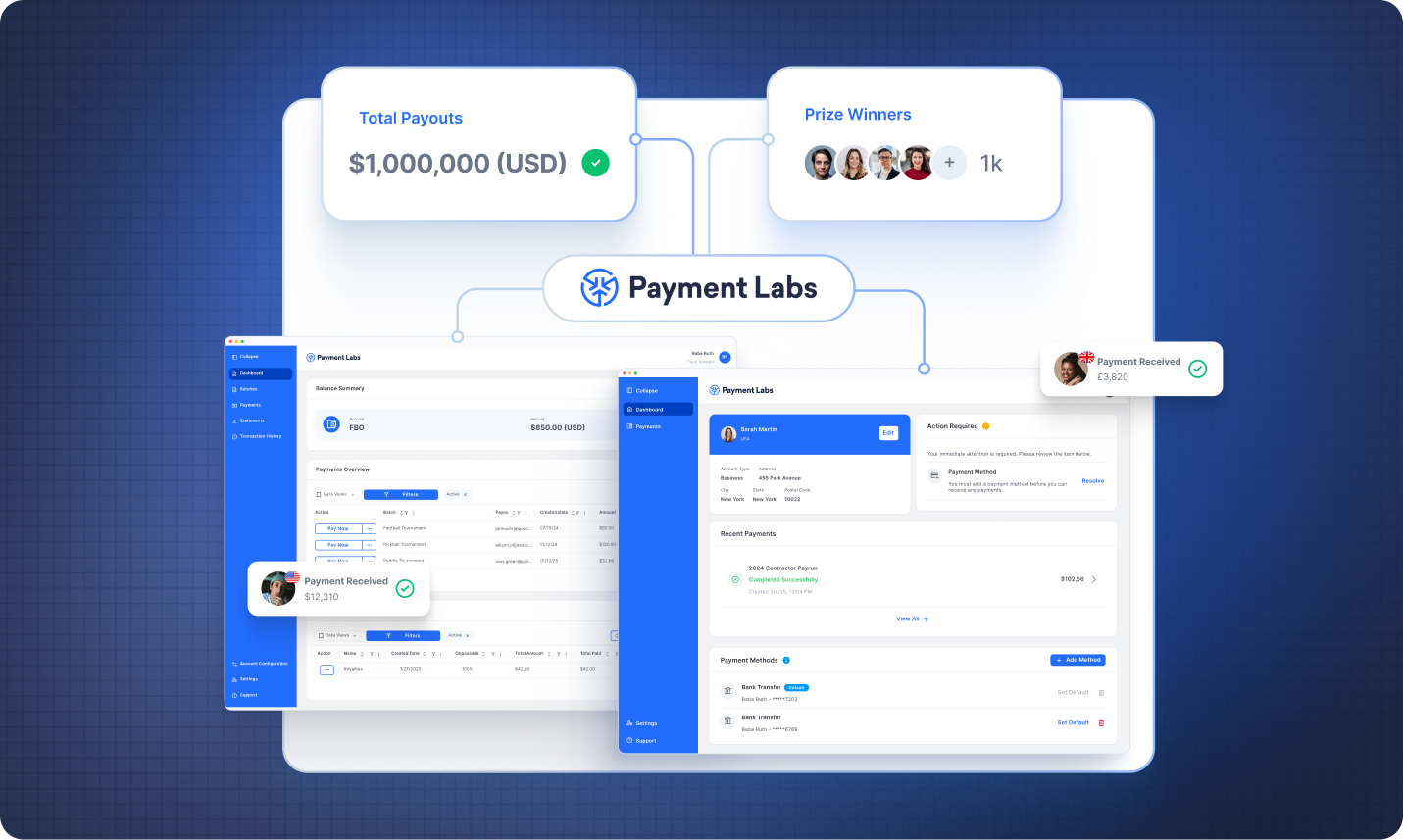
- Payee dashboard for managing payment preferences, income tracking, and tax documents
- AML and KYC compliance
- Integrations with accounting systems like QuickBooks, Xero, and NetSuite.
For NIL payment infrastructure that automates payins, payouts, tax documentation, and compliance end-to-end, contact our team.