Han Park on building Payment Labs and modernizing payments in sports


Han Park is the founder and CEO of Payment Labs, a fintech company helping organizations across sports, esports, and the creator economy manage revenue collection, payee onboarding, compliance, and global payments across more than 180 countries.
Before founding Payment Labs, Han spent more than two decades helping build ESL Gaming’s U.S. business, where he worked with approximately 60 game developers and publishers to develop their esports programs. ESL Gaming was later acquired by Savvy Games Group in a $1 billion transaction.
Today, Payment Labs works with organizations including the X Games, The Snow League, AVP, APP, and Microsoft. On the Sports Business Leaders Podcast, Han discussed how the payment challenges he experienced in esports led to Payment Labs, why legacy infrastructure remains difficult to replace, and what companies need to understand before selling into sports.
This interview has been edited and condensed for clarity. Listen to the full episode here.
How did your entrepreneurial journey lead to Payment Labs?
Most of my career has been spent in video game development and esports. And esports now operate much like traditional sports through organized competition, media reach, fan engagement, and viewership.
I spent almost 30 years helping build that industry in the U.S. More than 20 of those years were spent developing ESL Gaming, where my partners and I ran the U.S. business and worked with around 60 developers and publishers to build their esports programs.
Payment Labs came directly from that experience. Esports is global, and individual game titles often operate like distinct sports. As prize pools reached millions of dollars, one of my biggest challenges was paying competitors around the world through systems that were never designed for that scale.
The competitions had reached global scale, but the payment operations behind them were still built around legacy processes. I wanted Payment Labs to become infrastructure that made life easier for organizers, publishers, sponsors, and competitors while helping scale the industry.
What payment problem convinced you to build a company around it?
As we held more events and distributed more prize money, the limitations of those legacy processes became more pronounced.
Esports began as a grassroots activity. People entered tournaments, and a percentage of the entry fees became the prize pool. Cash or checks could work at a community level, but not for professional competitions with participants from around the world.
When you operate in U.S. dollars, many international recipients cannot easily receive or use that currency. You immediately face currency and cross-border complexities. Once money moves across borders, compliance enters the process. Many banks and foreign exchange providers did not understand esports, so we had to explain that these were legitimate transactions.
Taxes add another layer. Prize earnings may create tax obligations where the competition is held, where the competitor participates, or where the paying organization is based. A live event in France may create French tax requirements. A U.S. organization paying someone outside the country may have other reporting and withholding obligations.
Each payment may require tax handling, payee onboarding, anti-money laundering checks, sanctions screening, and recipient support. There are good solutions that move money, but they do not necessarily handle compliance and taxes as part of the full payment process.
At ESL, I used multiple payment providers, my bank, a tax service, and tax attorneys to manage these complications. I thought, “There has to be a better way.”
Payment Labs started as a solution to an esports problem. During the pandemic, gaming moved online, allowing us to strengthen our compliance systems, technology stack, and integrations with global financial partners. When live events returned, we saw that the same solution fit alternative and emerging sports looking to modernize their payment infrastructure.
How does Payment Labs simplify payment operations for sports organizations?
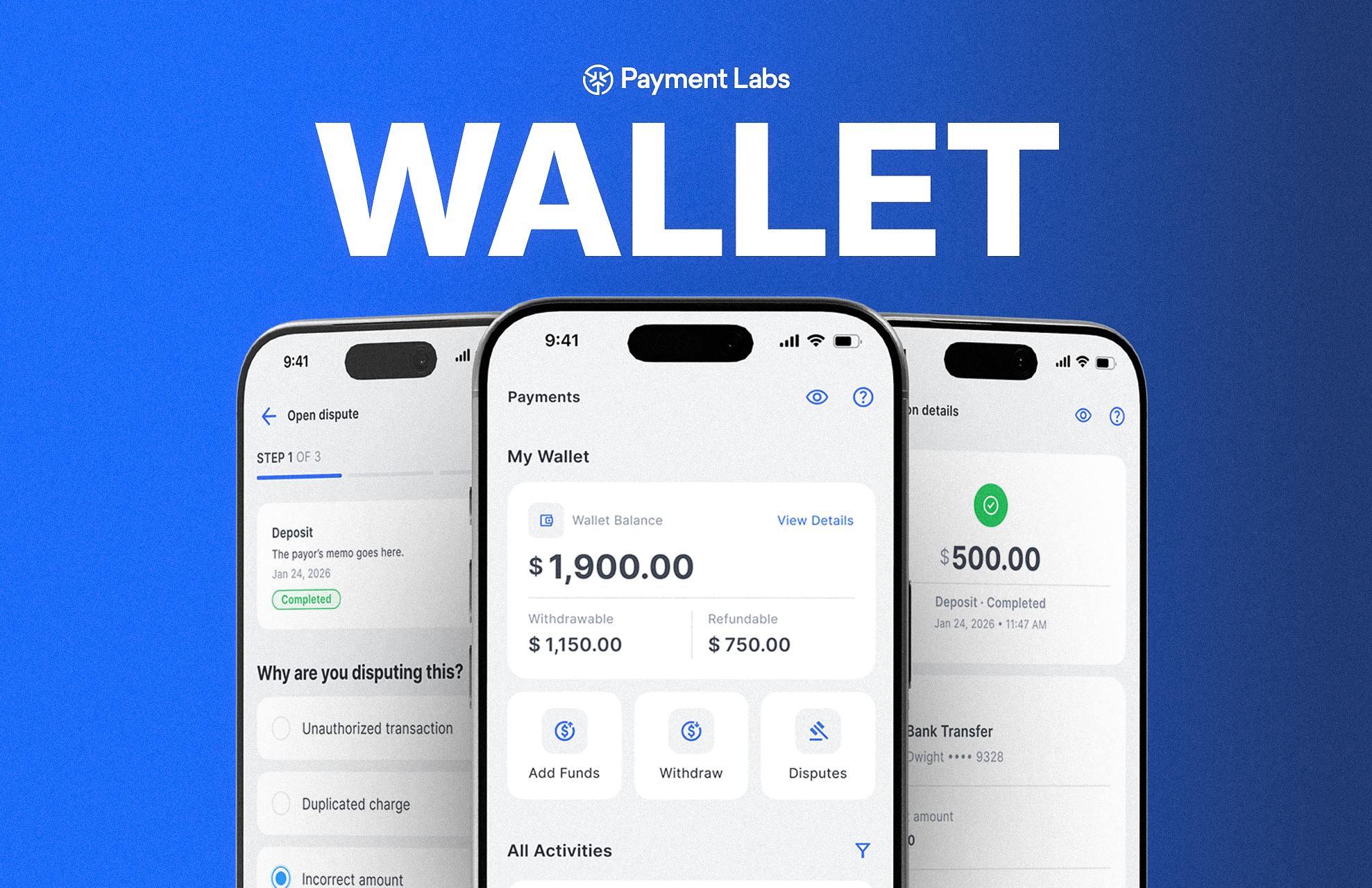
We built Payment Labs to bring payment operations into one platform, including revenue collection, payee onboarding, identity verification, anti-money laundering checks, sanctions screening, tax handling, currency conversion, global payouts, reconciliation, and recipient support.
Esports gave us experience with extreme payment cases. You might need to pay a 14-year-old winner in Nepal, where the banking infrastructure may not offer the same payment options available in more developed markets. Traditionally, you might have mailed a physical check and left the winner to figure out how to cash it and convert it into local currency. Those are the kinds of cases our solution had to handle.
New leagues often want modern infrastructure from the beginning, while legacy organizations are being pushed to replace cash and checks. When we speak with sports organizations, we ask how they manage payments today. Are they spending significant time reconciling spreadsheets? How many providers do they need for global coverage? How many people handle payment questions and decisions?
We often find that sports organizations use three or four providers to manage payments, compliance, tax, and related operations. Their teams may also be reconciling spreadsheets, managing separate accounts, answering payment questions, and coordinating tax and compliance work internally.
Our platform consolidates much of that fragmented infrastructure, including revenue collection, onboarding, compliance, tax workflows, and global payouts. As payment volume grows, the organization can process more transactions without its workload and costs increasing at the same rate.
How do you overcome switching costs for organizations using legacy systems?
Change management is one of the biggest hurdles. Traditional sports organizations have operated for a long time. Payments are critical, so they have staffed up internally or assembled multiple providers. The process may be inefficient, expensive, or no longer compliant, but it still gets the job done.
A U.S. organization that does not collect the appropriate W-9 or W-8 forms or meet its reporting obligations may expose itself to unnecessary risk. IRS penalties, interest, and fees can become costly. Security and privacy are also major concerns. Organizations should not be sending sensitive tax forms through unsecured email simply because that is how the process has always been handled. That information needs to be collected through a secure onboarding process.
Most organizations understand that they need to modernize, but they are running at 100 miles per hour just operating their businesses. They say, “We have been doing it this way for 20 years.” Changing the way people work is difficult, even when the benefits are clear.
That makes the sales cycle longer. We have to educate organizations about the risks and show what happens as they grow.
You do not want a solution whose costs and workload increase at the same rate as payment volume. You do not want to be punished for your success. You want infrastructure that allows you to process more payments while reducing the time and cost required.
The initial sales cycle may be long, but we have had almost no churn once customers join the platform. Some organizations have now worked with us for years, allowing us to demonstrate the platform’s long-term impact on their operations.
Customers also begin to look at infrastructure differently. Instead of treating it only as a cost center, they can reduce card-processing costs on entry fees and lower the legal, CPA, tax, reconciliation, and administrative expenses associated with payouts. The goal is to make the organization more efficient, help it scale, and potentially improve margins.
What advice would you give your younger self about selling into sports?
It is important to have a good reputation and a strong network. Familiarity with people in the industry is a major advantage. Being active in the community makes it easier to ask for introductions and reach the right organizations. I wish I had put myself out there and participated more when I was younger.
A strong reputation helps create warm introductions and shortens the time spent finding the right contact. Then you need an internal champion who understands the value proposition and can help you reach the decision-makers.
The RFP process in sports can also be difficult. Many leagues are sponsorship-driven, so value-in-kind and sponsorship discussions may happen before the merits of the service itself are considered.
I have learned to position our business more effectively and draw on the networks of our board, salespeople, and others who come from sports. Relationships, reputation, and active participation in the industry are critical to selling into it.
What final advice would you give companies selling into sports?
When we started working with organizations such as the X Games and The Snow League, we thought we could go broadly after the sports market. But go-to-market strategy in sports requires a real plan. You have to approach it vertically because what works in one sport may not translate to another.
We have customers in disc golf, but that does not mean the same solution works identically in billiards. The organizations may face similar challenges, but their events, payment flows, and operations are different.
We are treating each sports vertical almost as its own industry and using a land-and-expand approach. Once we establish a use case in one sport and support it with a customer case study, we examine whether other leagues, teams, and event operators in that vertical have similar payment flows and operational challenges.
To sell successfully into sports, you need to understand the specific sport, its buyer personas, how its organizations operate, where the friction occurs, and how your solution addresses it.
Modernize Your Global Payment Operations
Payment Labs helps organizations across sports, esports, and the creator economy manage revenue collection, payee onboarding, tax and compliance workflows, and global payments through one platform.
Get in touch with Payment Labs to explore our customer success stories and discuss modernizing your payment infrastructure.