How real-time payments work in the U.S. - RTP and FedNow explained
RTP and FedNow settle U.S. bank payments in seconds, 24/7. This guide explains how the networks work, how they differ from ACH, and what determines payout availability, transaction limits, and fees.

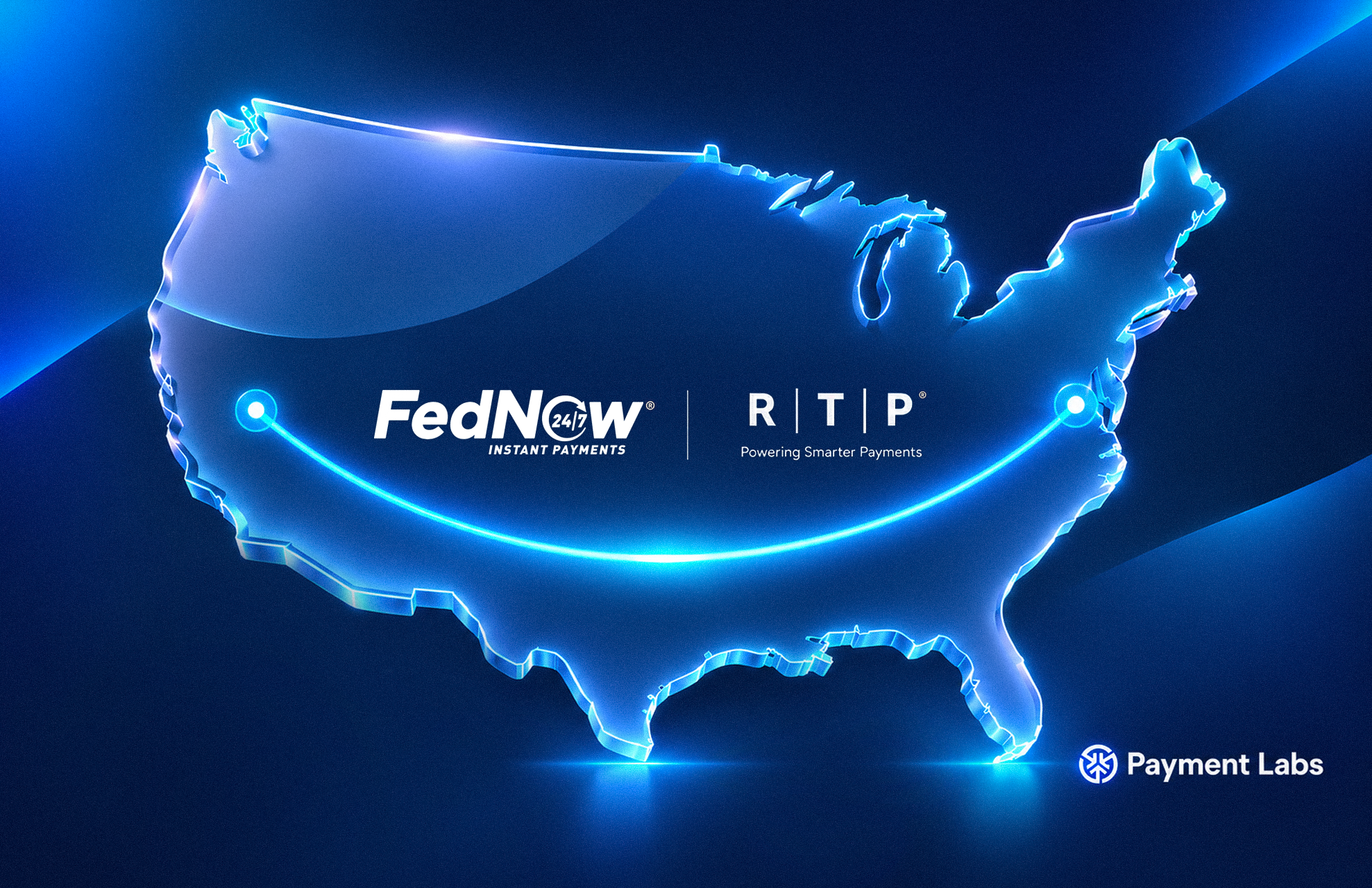
Real-time payments let individuals, businesses, and governments send money between participating U.S. bank accounts within seconds, including on weekends and holidays. The two main networks, RTP and FedNow, handled about 156 million payments in the third quarter of 2026.
With RTP and FedNow, the banks settle the payment within seconds and the payees can normally use the money immediately. Some payment apps also offer “instant” transfers, making money available before the banks have settled the transfer.
This guide explains who operates the U.S. payment networks, how real-time payments move from payor to payee, and what determines their availability, limits, and costs.
Who runs real-time payments in the U.S.?
The Clearing House (TCH) and the Federal Reserve operate the two U.S. networks for 24/7 instant bank payments: RTP and FedNow. Both organizations also operate separate systems for ACH payments and high-value wires.
The Clearing House’s role
The Clearing House is a private payments company owned by major commercial banks.
- The RTP network is the instant payment network TCH launched in 2017. It settles payments between participating institutions in seconds, around the clock. Once a payment settles, it’s final.
- Electronic Payments Network (EPN) is TCH’s ACH service, which processes payments in batches and handles about half of U.S. commercial ACH volume.
- Clearing House Interbank Payments System (CHIPS) is the system that clears and settles high-value U.S. dollar wires for domestic and cross-border payments.
See our guide on Fedwire vs CHIPS for large transactions in the U.S.
The Federal Reserve’s role
The Federal Reserve is the U.S. central banking system. It operates the following payment services.
- FedNow is the Fed’s instant payment service launched in 2023. Like RTP, FedNow settles individual payments between participating institutions in seconds, 24/7.
- FedACH is the Fed’s ACH service, which processes batches of payments such as payroll deposits, vendor payouts, and automatic bill payments.
- Fedwire Funds Service is used by banks for large or time-sensitive wire transfers. It settles each transfer in real time during scheduled operating hours.
How the networks fit together
RTP and FedNow operate independently. For an instant payout to work, both financial institutions must use the same network.
If the payee cannot be reached through either instant network, the provider may offer ACH instead. The payment then follows ACH settlement times and cutoffs.
RTP and FedNow settle U.S. dollar payments between participating U.S. financial institutions. Payments to overseas bank accounts require additional arrangements.
Where payment apps, wallets, and card payouts fit
Bank-to-bank payment services can make funds available immediately while the banks settle the transfer later through ACH, or they can use RTP or FedNow for instant settlement. Push-to-card payouts use card networks to reach accounts linked to eligible debit cards, with funds availability depending on the receiving institution. Transfers within the same bank or wallet service can happen through balance updates. Withdrawing money from a wallet to a bank account is a separate transfer.
How a real-time payment works
For example, a tournament organizer funds and approves a prize payout, and the winner completes any required onboarding. The payment provider then sends it through a participating bank. Once submitted to RTP or FedNow and accepted by the winner’s bank, the payment normally settles and becomes available within seconds. Both networks use ISO 20022, a standard for formatting payment messages.
- The sending bank submits a payment instruction with the amount and the winner’s routing and account numbers. The nine-digit routing transit number (RTN), also called an American Bankers Association (ABA) routing number, identifies the payee’s financial institution.
- The network checks the instruction and forwards it to the winner’s bank. That bank confirms it can accept the payment for the specified account.
- The network settles the payment by moving the money between the two banks. It confirms that the transfer is complete. The payment is final at that point.
- The winner’s bank credits the account and makes the money available.
When funds become available
Settlement and funds availability are separate. Some banks offer early access to ACH direct deposits by advancing their own money before settlement. RTP and FedNow normally require immediate funds availability, but some exceptions allow a receiving bank to delay access while investigating legal or compliance concerns.
Payment finality and returns
Final settlement means the sender cannot simply cancel a completed payment. If an organization sends the wrong amount or pays the wrong account, its bank can request a return of funds. Both networks support return requests, but requesting the money back does not guarantee recovery.
FedNow vs RTP
FedNow settles payments in Federal Reserve accounts. It debits the account the sending bank uses for settlement and credits the account the receiving bank uses. A bank can use its own Fed account or arrange for another bank to settle on its behalf.
RTP settles payments on The Clearing House’s ledger. Banks fund a joint account at the New York Fed in advance. When a payout settles, RTP subtracts the amount from the sending bank’s ledger balance and adds it to the receiving bank’s. The funds backing those balances stay in the joint account, which a group of RTP participants owns and The Clearing House manages.
Bank participation and customer access
Banks and credit unions can join either network or both. They sign agreements with each operator, set up their connection and settlement arrangements, and test before going live. Some start by receiving payments and add sending later. For a business, the available route depends on which networks its bank or payment provider supports and which can reach the payee’s account. Customer eligibility, transaction limits, and fees also depend on the bank or provider.
Transaction limits and fees
Both networks currently have a $10 million limit per payment. Banks and providers may set lower limits for their customers, so network participation alone does not establish how much an organization can send.
Both networks publish a base sending fee of 4.5 cents per transfer between participating institutions. The network fees are charged to financial institutions. The payout fee an organization pays is set by its bank or payment provider.
ACH vs real-time payments
ACH (Automated Clearing House) is a U.S. network for electronic payments between bank accounts. Nacha is a nonprofit that governs the network and coordinates its development, including changes to its operating rules and standards.
The Clearing House processes ACH payments through EPN, and the Federal Reserve through FedACH. These two services exchange payment instructions, while RTP and FedNow do not.
Standard ACH credits generally settle in one or two banking days. Same Day ACH can settle within hours, subject to cutoffs. ACH does not settle on weekends or federal holidays. ACH can push money to a payee or pull it with the account holder’s authorization. RTP and FedNow support credit pushes only.
RTP and FedNow use the same ABA routing-number system as ACH to identify banks. Sharing those identifiers does not mean an instant payment passes through ACH. Your provider must check that the payee’s routing number and account can receive payments through the chosen instant network.
Real-time payments with Payment Labs
Payment Labs manages payee onboarding, payouts, and tax compliance for organizations paying athletes, contractors, and prize winners. FedNow is available for eligible U.S. bank payouts, allowing payees to receive funds within seconds once a payment is submitted and accepted. Organizations can also use FedNow to fund the FBO (for-benefit-of) bank account that holds their payout funds. Our team provides 24/7 support for your organization and the people you pay.
Talk to Payment Labs about real-time payouts for your organization.