How card payment processing works: steps, participants, fees, and settlement
Learn how card payments move, which parties are involved, what fees apply, and what to consider when choosing a payment processing provider.

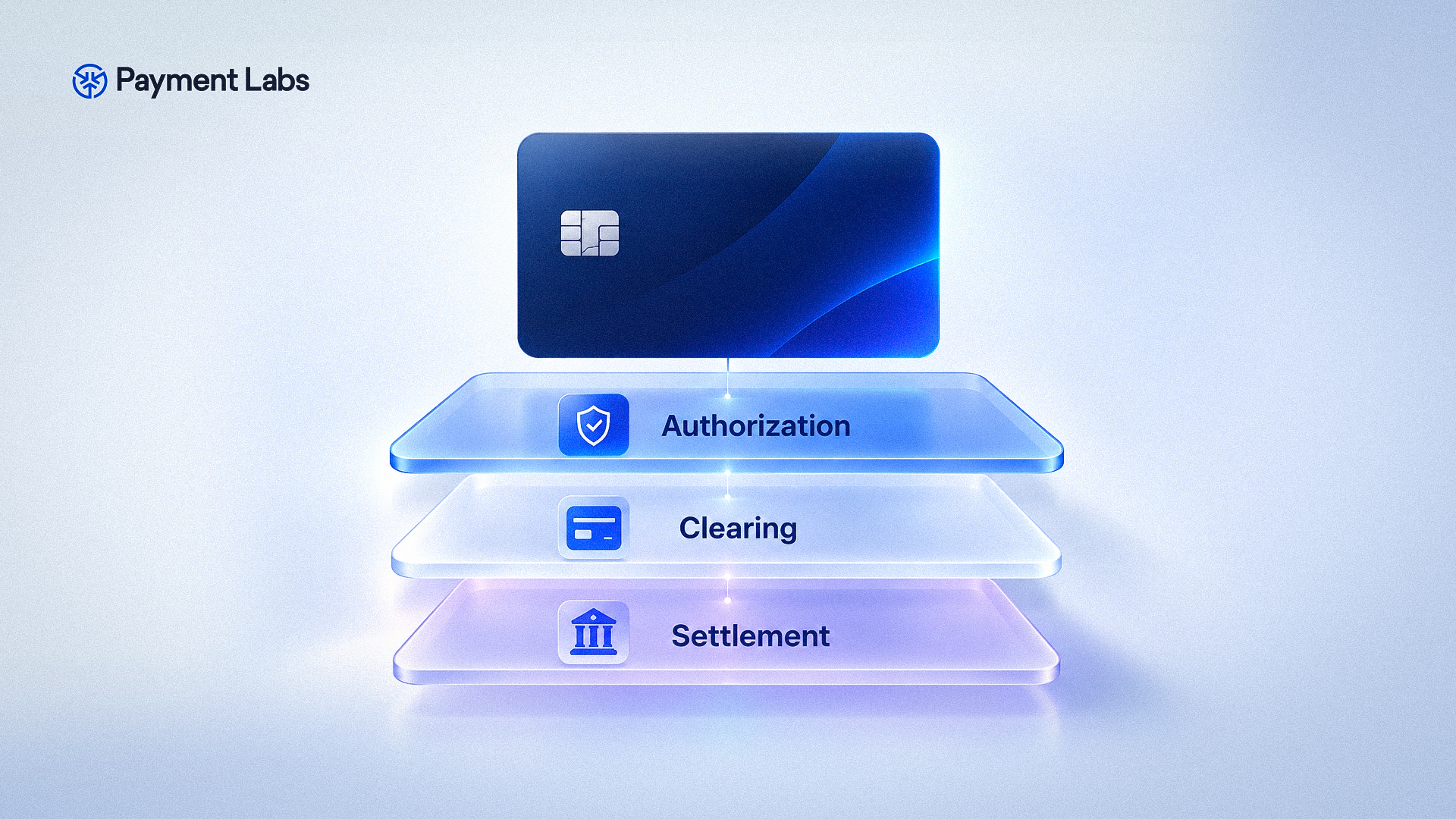
A card payment moves from the checkout or terminal through the merchant’s payment provider and acquirer bank to the card network and issuing bank. The issuer approves or declines the request within seconds. Approved transactions are then captured, cleared, settled between the banks, and funded to the merchant, minus applicable fees.
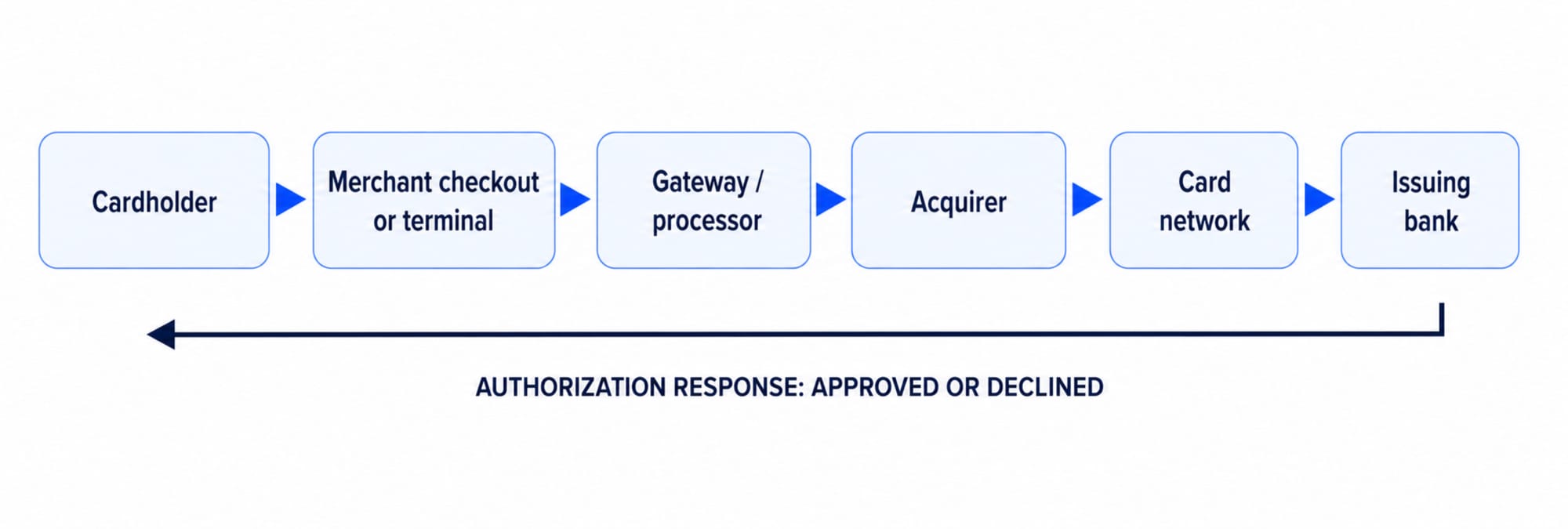
Card payments are so embedded into everyday life that according to the Federal Reserve, credit and debit cards accounted for roughly two-thirds of U.S. consumer payments in 2025. Yet each transaction is a complex process that involves several parties, separate authorization and settlement stages, and fees that are not always visible to the cardholder.
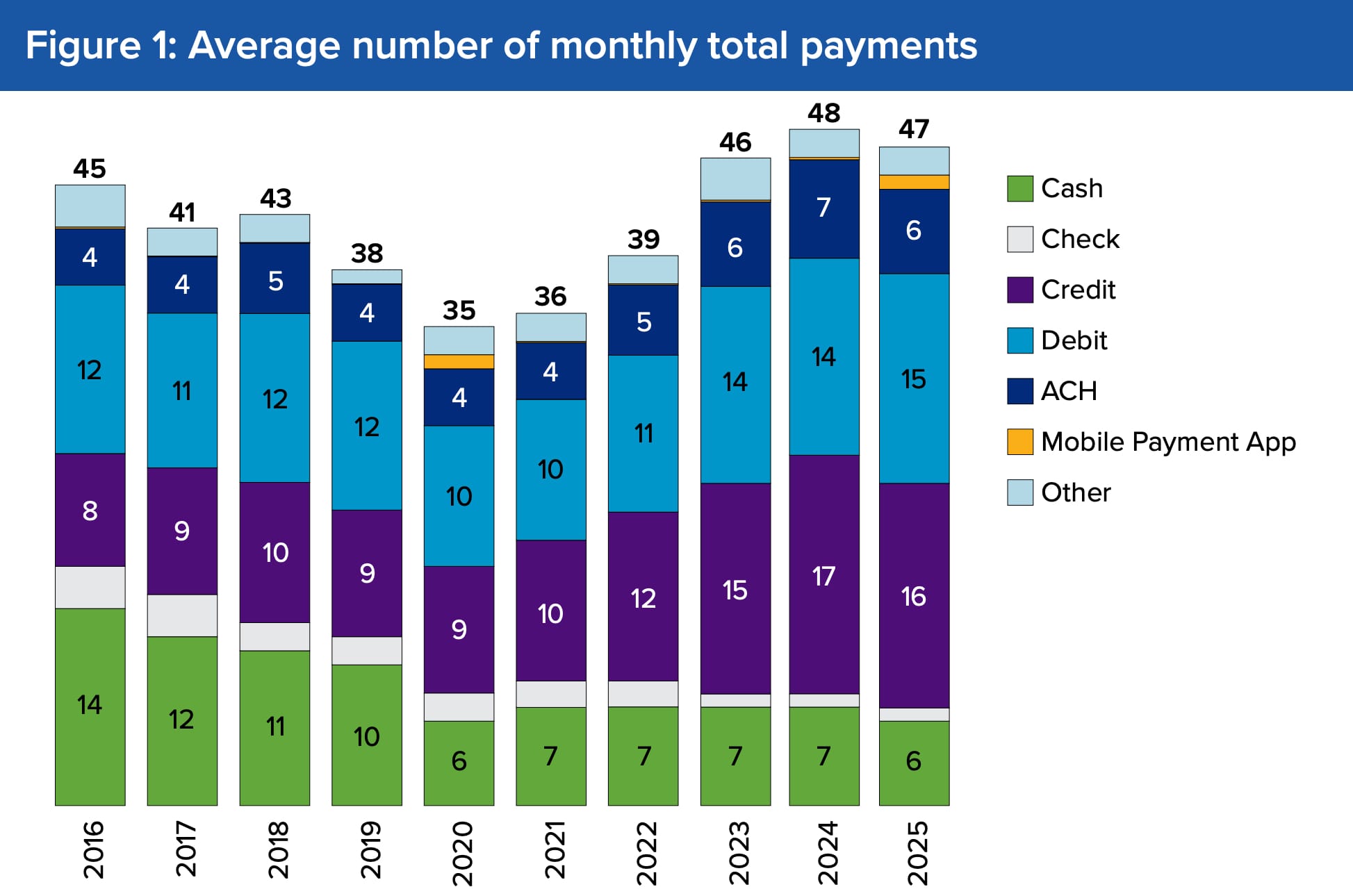
2026 Findings from the Diary of Consumer Payment Choice
This article explains how card payments are processed, who participates in each transaction, what fees merchants may pay, and what to consider when choosing a payment provider.
How a card payment is processed
Card processing consists of several important stages.
- Card details are submitted
The cardholder presents a physical card, taps their device, or enters credentials at checkout. The merchant’s terminal or online checkout sends the encrypted payment data to its gateway or payment provider.
- The cardholder may neem to be authenticated
Depending on the transaction, additional authentication can be required. Online payments, for example, may use EMV 3-D Secure, a security protocol designed to help confirm that the person making the purchase is the authorized cardholder.
- The issuer authorizes or declines the payment
The request travels through the processor, acquirer, and card network to the issuing bank. The issuer checks the account, available funds or credit, transaction details, and fraud signals before returning an approval or decline.
- The merchant captures the transaction
Capturing the transaction means that the business requests the collection of previously authorized funds from a customer's payment card. This can happen immediately or after the merchant has fulfilled the order.
- The transaction is cleared
Captured transactions are submitted through the card network. The network calculates the amounts owed between the issuer and acquirer and applies the relevant interchange and network fees.
- The issuer and acquirer settle
Funds move from the issuing side of the transaction to the acquiring side.
- The merchant receives the funds
The acquirer or payment provider deposits the proceeds into the merchant’s designated account. The deposit may be reduced by processing fees, refunds, chargebacks, reserves, or other adjustments.
Authorization usually takes seconds, but capture, settlement, and merchant funding take longer. Timing depends on the provider’s cut-off times and funding schedule, as well as weekends, holidays, and the merchant’s account risk profile
Who participates in card payment processing
A card transaction involves several organizations, although the same provider may perform more than one role.
Who charges what fees when you make a card payment
The total processing cost can include charges from several participants of the payment chain. Some providers bundle these costs into one rate, while others show the underlying network costs and provider markup separately.
- Interchange fees - card networks establish interchange rates and the fees are paid through the acquirer to the card issuer. The cost is generally passed on to the merchant as part of the processing charge. Rates vary by card type, transaction method, merchant category, region, and other factors.
- Network or scheme fees - Visa, Mastercard, and other card networks charge fees for using their infrastructure. Network fees can include assessment, authorization, processing, and cross-border charges.
- Processor and acquiring fees - the processor, acquirer, or payment service provider charges a fee for routing transactions, maintaining the merchant account or processing relationship, managing settlement, and providing related services. This may be a percentage of the transaction, a fixed amount, or both.
- Gateway and platform fees - a merchant may pay separately for payment-gateway access, hosted checkout tools, tokenization, fraud controls, reporting, or other features.
- Cross-border and currency-conversion fees - a transaction may generate additional fees when the card issuer is located in a different country from the merchant or acquirer. If currency conversion is required, a conversion rate and markup may apply. The issuer may also charge a foreign transaction fee.
- Refund and dispute fees - providers may charge an additional fee for processing refunds, and the original processing fees may not be returned. When a cardholder disputes a payment, the merchant may also be charged a dispute or chargeback fee.
- Account and operational fees - depending on the provider, merchants may also be charged monthly account fees, minimum-processing commitments, PCI compliance or noncompliance fees, statement fees, reserve requirements, and fees for additional services.
The advertised transaction rate rarely tells the whole story. That’s why merchants should compare total costs based on their expected transaction volume, sales channels, refund rate, dispute rate, and domestic versus international payments.
Common card-processing pricing models
- Flat-rate pricing - the provider charges the same percentage and fixed amount for most transactions.
- Interchange-plus pricing - interchange and network costs are passed through, with a disclosed provider markup added.
- Subscription or membership pricing - the merchant pays a recurring fee plus specified transaction costs.
- Tiered pricing - transactions are grouped into pricing categories such as qualified, mid-qualified, or non-qualified.
Declines, reversals, refunds, and chargebacks
These outcomes can occur at different stages of the payment lifecycle:
- Decline - the issuer refused the authorization request
- Authorization reversal - a previous authorization was released or cancelled before settlement
- Void - the merchant cancelled the transaction before it settled
- Refund - the merchant returned funds after the transaction settled
- Chargeback - the issuer reversed a transaction through the cardholder dispute process
How international card payments differ from domestic payments
When the card issuer is located in a different country from the merchant or acquirer, the transaction is treated as cross-border, but the exact classification depends on the card network’s rules and the acquiring arrangement.
Three currencies may be involved:
- Transaction currency - the currency in which the cardholder is charged at checkout
- Cardholder billing currency - the currency in which the issuer bills the cardholder
- Settlement currency - the currency deposited into the merchant’s account
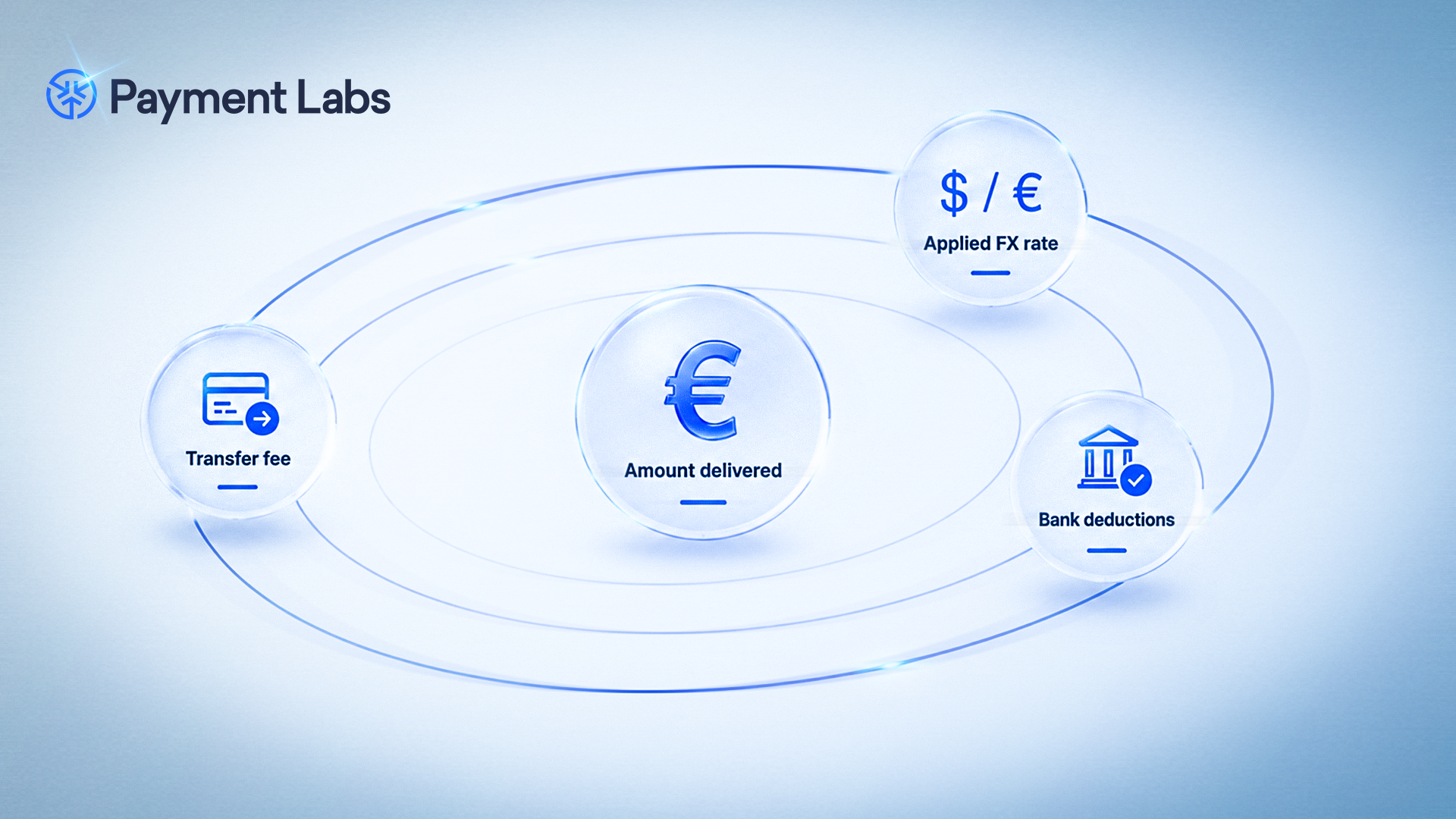
A cross-border payment can create several additional costs. The merchant may pay a network cross-border assessment, an FX conversion charge, or a provider markup. The cardholder may separately pay a foreign transaction fee charged by the issuer.
Dynamic currency conversion (DCC) allows the cardholder to pay in their home currency at checkout, but the conversion rate and markup are supplied by the DCC provider. It should not be confused with the cardholder’s issuer performing the currency conversion.
Local acquiring allows a business to process a customer’s card payment through an acquiring setup in the same market as the card issuer. Where supported, this can reduce cross-border routing and costs and may improve authorization rates. Businesses should ask where a provider acquires transactions locally, which currencies it settles, and who performs each currency conversion.
For more detail, read our guide on understanding foreign currency exchange for international business.
How to evaluate a card payment provider
The payment provider a business chooses affects acceptance, cost, risk, funding, and reconciliation. When comparing providers, check:
- Which countries, settlement currencies, card networks, card types, and alternative payment methods it supports.
- Whether pricing is flat-rate, interchange-plus, subscription-based, or tiered.
- Which interchange, network, processor, gateway, FX, refund, dispute, monthly, and minimum-volume fees can apply.
- When merchant funds are deposited and how cut-off times, weekends, holidays, reserves, or account reviews can delay funding.
- How the provider handles encryption, tokenization, EMV 3DS, recurring payments, stored credentials, and account updater services.
- Which fraud controls are included, how rules can be configured, and how suspicious or declined transactions are reviewed.
- What card data enters the merchant’s systems and which PCI DSS responsibilities remain with the merchant.
- Whether reports connect gross sales with fees, refunds, chargebacks, reserves, and net deposits.
- How disputes are submitted, which deadlines apply, what evidence is required, and how case status is tracked.
- Whether the platform can support additional transaction volume, countries, currencies, business entities, and sales channels without requiring additional systems.
- What technical and payment-operations support is available during failed transactions, funding delays, fraud incidents, or reconciliation problems.
- Whether transaction and customer data can be exported if the business changes providers.
How Payment Labs supports card payins and participant payouts
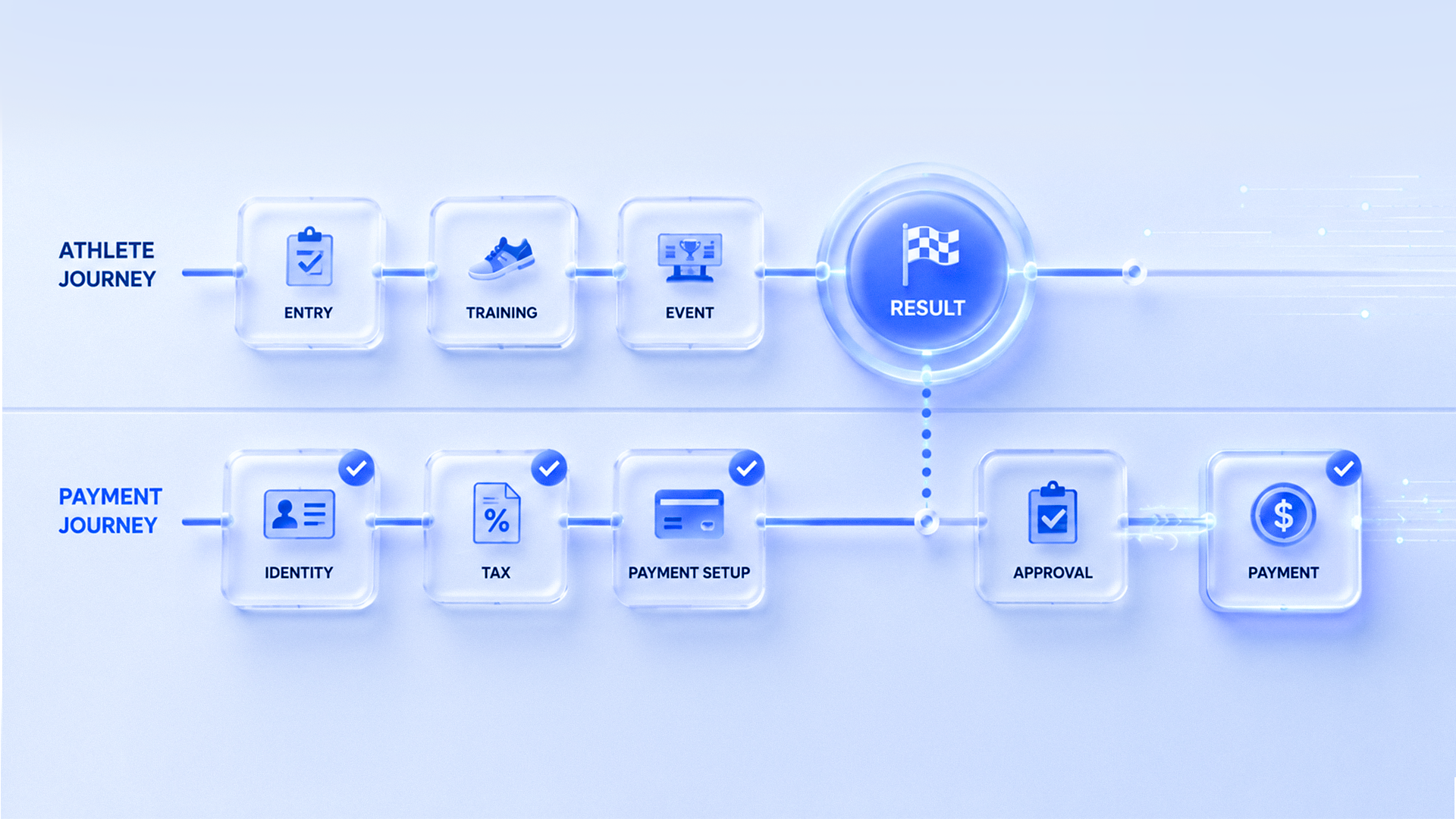
Sports and esports organizations, tournament operators, creator platforms, and NIL programs rarely need card processing in isolation. The same organization may collect entry fees and registrations, pay athletes, winners, creators, or contractors, and reconcile both sides of the payment flow.
Payment Labs connects payins and payouts in one platform. Organizations can accept card payments through a customizable checkout, track incoming transactions alongside outgoing payments, and handle the tax and compliance work associated with paying participants.
Payment Labs provides:
- Card-based payins for entry fees, registrations, and other participant payments
- Domestic and international payouts through multiple payment methods
- Support for more than 150 currencies across more than 180 countries
- Centralized tracking and reconciliation of payins and payouts
- Unified tax documentation, withholding, identity verification, and compliance workflows
- 24/7 payment support for organizations and payees
Bring participant payins, global payouts, tax workflows, and reconciliation into one system. Schedule a call with Payment Labs.