How to reconcile payments across multiple systems in sports, esports, and creator economy


Your dashboard shows strong sales, ticketing reports are up, sponsorship invoices are in, and payouts are scheduled. Then you open your bank accounts.
Some payments haven’t landed yet. Others are affected by exchange rate fluctuations. A few don’t match anything in your system at all. Now you’re digging through processor reports, ticketing exports, payout logs, and spreadsheets to figure out what actually happened.
Payment reconciliation is what brings these systems back into alignment by matching internal records against external systems and resolving discrepancies.
In this article, we break down:
- How payment reconciliation works
- Where it breaks in sports, esports, and creator platforms
- How to design a system that keeps your financial data accurate as your payment stack grows.
What payment reconciliation is and isn’t
Payment reconciliation is the process of making sure the numbers in your systems match the money that actually moves. That means:
- Matching transactions across systems
- Identifying where they don’t line up
- Resolving the differences.
For each transaction, you’re checking the alignment across timing, amount, currency, reference, and fees. Some differences (fees, settlement delays) are expected. Others (refunds, chargebacks, missing transactions) need investigation. You’ll want to look at:
- Who paid you
- How much they paid
- The date they paid you
- The reference
- The currency they paid you in
- Any fees
A processor report can show a successful transaction that never settled to your bank account. A payout system can show a scheduled payment that never reached the payee. Reconciliation is what catches both before they turn into missing cash or incorrect payouts.
Reporting shows what a system thinks happened. Reconciliation checks what actually happened and stops you from paying the wrong amounts.
In sports, esports, and the creator economy, reconciliation sits directly in the flow of money.
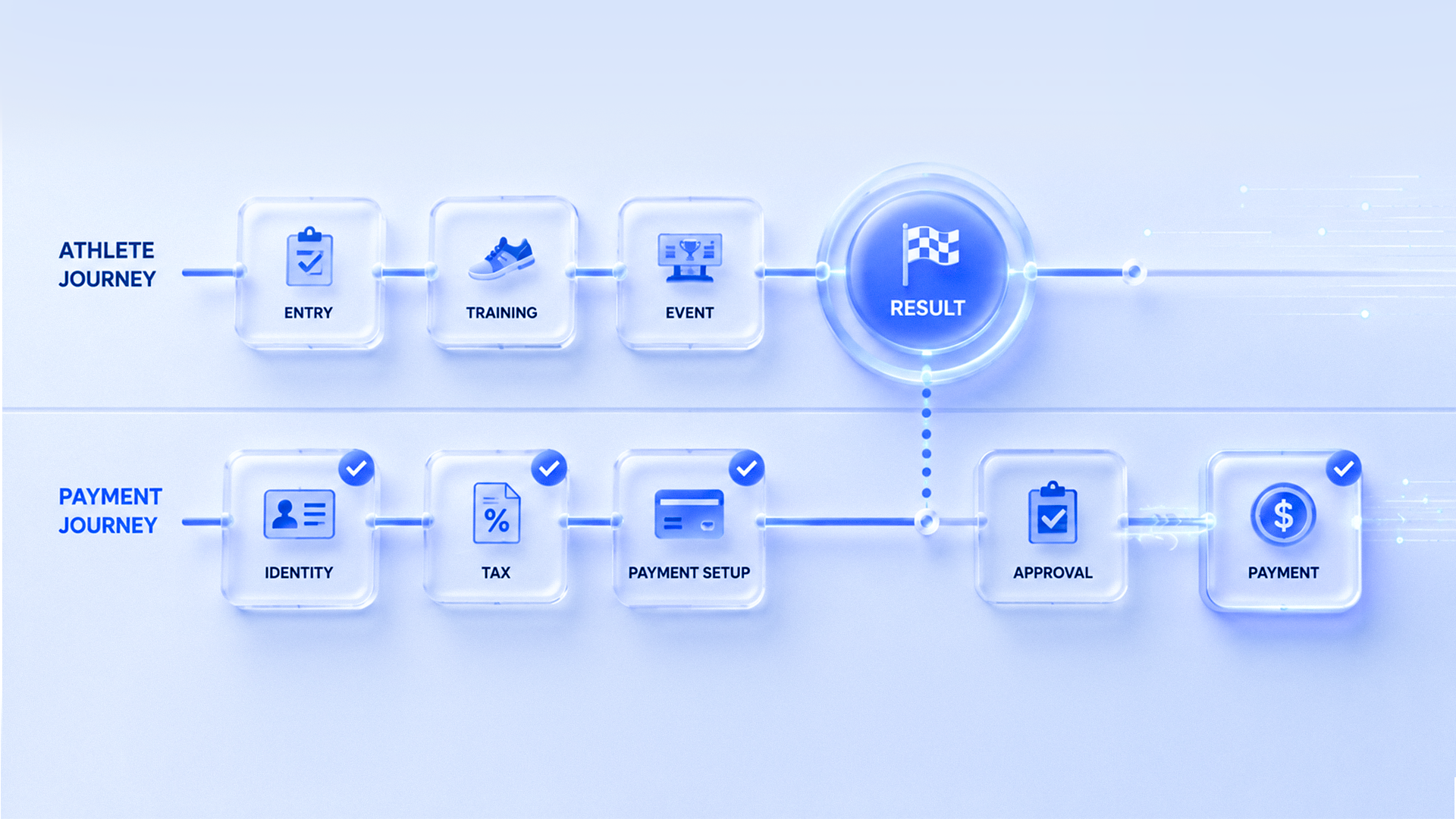
Results are calculated in one system (tournament standings, revenue shares, sponsorship splits), and then you push a button to send payouts. Reconciliation is what ensures those numbers are correct before that money goes out, and that it actually arrived after.
Practical examples of payment reconciliation workflows in sports, esports, and creator economy
Esports tournaments and sports events
- Prize pool reconciliation is one of core Payment Labs use cases. Results are calculated, payouts triggered, and reconciliation ensures correct amounts before sending and after fees and FX.
- Ticketing platform settles a batched amount to the organizer, which needs to be matched back to individual ticket sales, minus platform fees and refunds.
- Sponsorship invoices vs. actual payments received, with multiple sponsors paying in tranches, at different times, and in different currencies.
Creator economy
- A platform calculates creator revenue shares and pushes payouts. Reconciliation ensures each creator receives the correct amount after fees, taxes, and FX.
- Brands pay a platform for creator campaigns. The platform splits and distributes funds to creators, reconciling the inbound brand payment against outbound creator payments.
Reconciliation across different systems
Each system involved in a transaction records it differently and applies its own fees, settlement timelines, and data format. Traditional categories like bank, accounts receivable, accounts payable, and payroll reconciliation are just surface views of matching records across systems that don’t share a single source of truth.
In esports, sports, and the creator economy, this shows up across a consistent set of systems:
- Bank systems - where the net amount of a transaction is confirmed and settled. The bank statement is the truth for what actually landed, after processor fees, refunds, and currency exchange have been applied elsewhere.
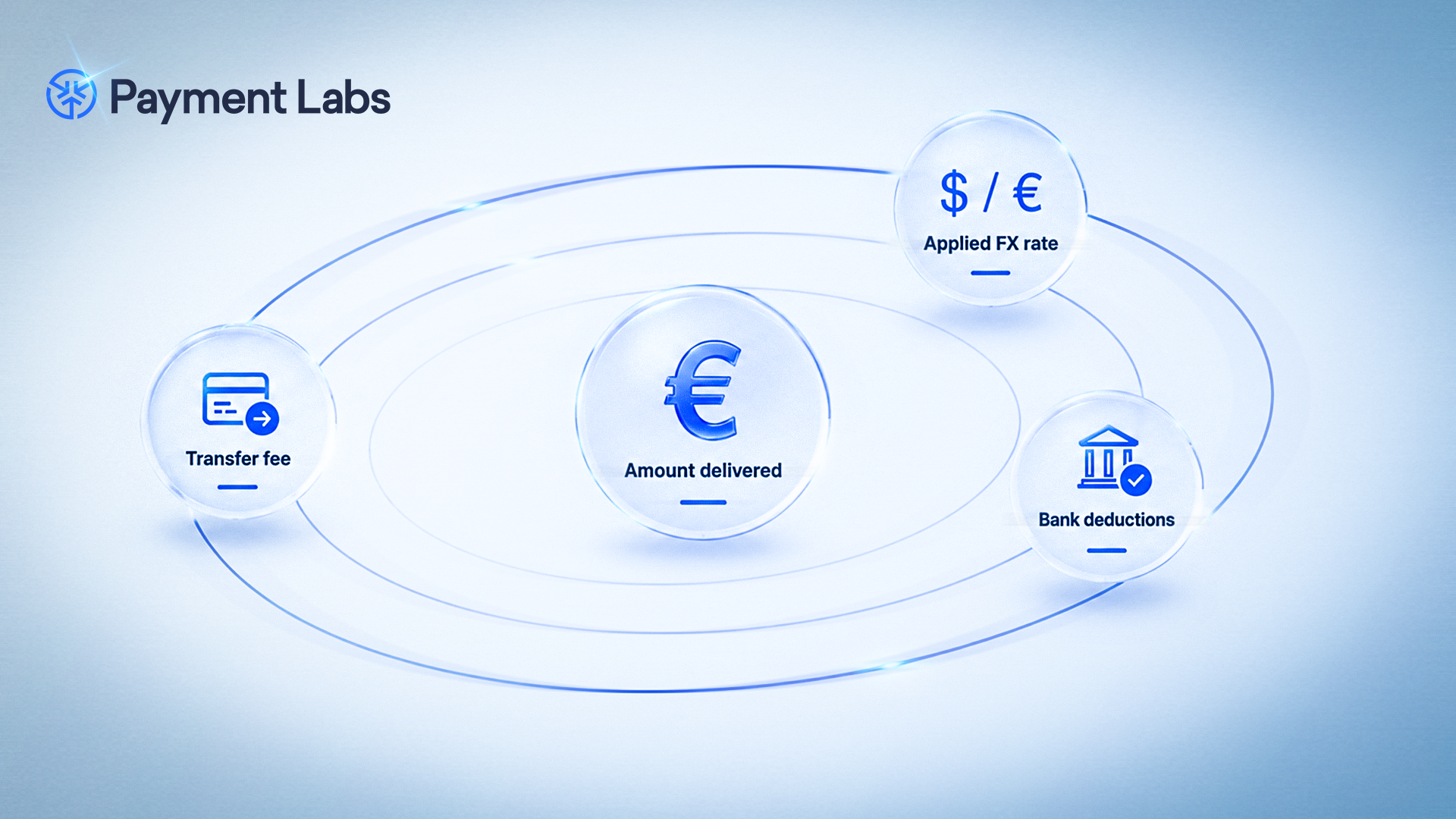
- Payment processors - where transactions are authorized, fees are applied, refunds and chargebacks deducted, and a net settlement figure is calculated before funds move to your bank. Most processors batch transactions before settling, so each bank deposit can represent hundreds of transactions with their own adjustments.
- Internal systems (ERP, ledger, CRM) - where revenue is recorded as expected before any external processing occurs. Typically it reflects gross amounts without fees, refunds, or chargebacks, so they have to be reconciled against it later.
- Payout systems - where outgoing payments to creators, teams, vendors, or partners are processed. There is a gap between the amount recorded in the internal system and what a payout platform processes due to fees, exchange rates, and failed or retried payments. Reconciliation ensures this gap doesn’t lead to under- or overpayments.
- Marketplaces and ticketing platforms - where sales are captured and fees are deducted before anything reaches your system. These systems also aggregate transactions and settle them in batches, creating a challenge of matching the settlement back to individual sale records in your internal system.
Without reconciliation before and after money moves, there’s no reliable link between what your system calculates and what is actually paid out.
Why reconciliation breaks in esports, sports, and creator platforms
Reconciliation breaks because payouts are executed in one system while the underlying finacial data is scattered across processors, banks, and internal tools. Here are some of the most common reconciliation challenges.
- Batch vs individual transaction mismatch - money moves in batches through banks and processors, but businesses track individual transactions in their own systems.
- Every system modifies the data - fees, FX, commissions, and taxes are applied at different stages in the flow, and each modification needs to be traced back through the reconciliation process.
- Timing isn’t aligned - earnings are calculated instantly in internal systems, while settlement through processors and banks can take days.
- Formats differ across systems - IDs, date formats, and other details often differ between internal systems, processors, and bank statements, so matching requires cross-referencing rather than direct links.
- Split-payment complexity - a single transaction is often distributed among several payees, each with their own fees, timing, and adjustments.
- Failures change outcomes - failures and retries inside payouts (wrong bank details, compliance checks, FX issues) create mismatches between sent and received funds.
Even when teams understand where mismatches come from, reconciliation remains difficult because the problems are built into how systems work. Some challenges are structural:
- Reconciliation depends on incomplete data - every system is always slightly ahead or behind another.
- Corrections apply backward - changes like refunds or FX updates rewrite history, not just future records.
- Reconciliation has to be a continuous process - reconciliation runs on live, changing data, not a fixed dataset.
Payment reconciliation process step-by-step - how reconciliation works
Reconciliation follows a defined set of steps:
- Data aggregation - pulling transaction data from all relevant systems.
- Transaction matching - linking records that represent the same payment across systems.
- Discrepancy detection - identifying where records don’t match.
- Resolution - investigating mismatches, determining the cause (fees, refunds, FX, failed payments).
- Adjustment - updating internal records to reflect the confirmed data.
- Audit trail - recording matches, changes, and corrections so there’s a traceable history of how you’ve come to the final numbers.
Where reconciliation is applied by vertical
Money in sports, esports, and the creator economy doesn’t flow through a single system. It moves across multiple systems that record, transform, and settle the same activity in multiple ways. Reconciliation sits in the middle of this flow, connecting these fragmented records across revenue generation and settlement.
- Revenue is created in one system but settled in another
Revenue is recorded at the point of activity but becomes available once it passes through external settlement systems.
- Sports - ticket sales, memberships, merch, and sponsorships are recorded in event or ecommerce systems, and settled later through processors or banks.
- Esports - ticketed events, sponsorships, tournament revenue, and media rights are recorded in platform systems, then settled through processors and payout rails.
- Creator economy - subscriptions, ads, brand deals, and tips are recorded in platforms but only become cash after processor and payout cycles complete.
The difference is not in revenue type but in how many systems sit between generation and settlement.
- A simple transaction becomes multiple financial records
Every transaction decomposes upon entering financial infrastructure.
- Sports - one ticket or merch sale transforms into gross revenue, fees, refunds, and net bank settlement.
- Esports - one event or sponsorship payment is shared among multiple payees, platform deductions, and prize payouts.
- Creator economy - one brand payment or subscription becomes many creator payouts, platform fees, taxes, and FX-adjusted transfers.
The same pattern repeats across verticals as a single business event fractures into multiple financial records.
- No system contains the full version of truth
Each system only reflects one layer of the flow, not the complete lifecycle.
- Sports - ticketing shows sales, processors show transactions, banks show settlements.
- Esports - platforms show earnings, payout systems show disbursements, banks show final cash movement.
- Creator economy - dashboards show earned revenue, processors show processed payments, payout systems show executed transfers.
Reconciliation for sports, esports, and the creator economy alike means reconstructing a single coherent version of cash flow.
How Payment Labs automates reconciliation for sports, esports, and creator economy
The common thread across sports, esports, and the creator economy is that reconciliation breaks when it's separate from execution.
To fix that, Payment Labs embeds reconciliation directly into the payout flow, so calculations from tournament, athlete, or creator systems don’t need to be reconciled later in spreadsheets or accounting tools. They are validated and executed in the same step, either automatically or on demand by staff.
Each payout is checked before execution against:
- available balance
- FX rates and conversion rules
- platform fees and split logic
- recipient and compliance constraints
Once validated, payouts are sent directly to the payees. Prize winnings, revenue shares, and creator payouts move as a single controlled flow. This reduces the need for post-settlement reconciliation because every payout is aligned before it’s sent.
Book an intro call with Payment Labs to see how reconciliation can be automated in a platform purpose-built for your industry.