Payment compliance requirements: how businesses can safely accept payments and send payouts
Small gaps in onboarding, documentation, screening, or provider setup quickly turn into frozen accounts, delayed payouts, and audits. This guide covers key regulations, AML/KYC requirements, compliance workflows, frozen-account risks, and provider features to review before moving money at scale.

Most organizations do not expect to have to become payment compliance experts. They just want to accept customer payments and send money to the right people without delays or mistakes.
The problem is that payment compliance gets complicated as soon as you add higher payment volume, international payouts, contractors, creators, prize winners, or multiple payment methods. A process that works for a small domestic payment flow won’t hold up when you start sending payouts across borders to thousands of payees.
This article breaks down what businesses need to know about payment compliance requirements, including:
- the main U.S. payment rules and standards that affect payins and payouts
- the difference between AML, KYC, CDD, and EDD
- how to build a basic payment compliance workflow
- common mistakes that can lead to frozen accounts or delayed payouts
- what to look for in a compliant payment provider
- how Payment Labs helps businesses manage compliant payins and payouts at scale
The goal of this guide is not to turn your team into a compliance department. It is to help you understand where your responsibilities start, where your provider should support you, and how to avoid preventable payment issues as your business grows.
Key payment regulations and standards businesses need to know
Payment compliance requirements vary by industry, transaction type, location, and payment method. Organizations in gambling, lending, healthcare, real estate, financial services, and other regulated industries have additional obligations but for most businesses that accept payments or send payouts, these are the core U.S. rules and standards to understand.
- Bank Secrecy Act (BSA) - the BSA is one of the main U.S. anti-money laundering laws. It gives the Treasury Department authority to require reporting, recordkeeping, and compliance controls that help detect and prevent money laundering. BSA obligations are handled mainly through covered financial institutions, money services businesses, and other covered businesses, but your business may still need to provide accurate records when transactions are reviewed.
- Customer Identification Program (CIP) - CIP requirements come from the USA PATRIOT Act and require covered financial institutions to verify customer identity before opening accounts. For payout-heavy companies, CIP-style requirements often show up through the identity checks your bank or payment provider performs during onboarding.
- Anti-Money Laundering and Countering the Financing of Terrorism (AML/CFT) - AML and CFT controls are designed to prevent payments from being used for money laundering, terrorist financing, sanctions evasion, fraud, and related financial crime. This involves identity verification, risk scoring, transaction monitoring, sanctions screening, and documentation requests.
- Office of Foreign Assets Control (OFAC) sanctions - OFAC sanctions compliance can require businesses and their providers to identify blocked parties, restricted jurisdictions, and prohibited transactions. Screening is a common control used to manage that risk.
- Electronic Fund Transfer Act (EFTA) and Regulation E - EFTA and its implementing regulation, Regulation E, primarily govern consumer electronic fund transfers. Depending on your payment flow, your provider may handle much of the operational compliance, but businesses still need clear payment records, transparent customer communication, and secure payment processes.
- Payment Card Industry Data Security Standard (PCI DSS) - PCI DSS is an industry security standard that applies to businesses that store, process, transmit, or can affect the security of cardholder data. It is especially important for merchants that accept card payments online or through a payment gateway.
What are your regulatory responsibilities?
Your responsibilities depend on your business model, industry, countries you operate in, and payment methods. A merchant accepting domestic card payments has a different risk profile than a platform paying creators across the U.S. and EU or an esports company sending prize payouts to winners in several countries.
In most cases, your bank or payment processor handles much of the regulated financial infrastructure. But your business still has work to do. At a minimum, you should be able to:
- collect accurate customer, merchant, contractor, creator, or payee information
- follow the onboarding rules set by your payment provider
- support KYC, KYB, CDD, and EDD checks when required
- protect payment and personal data
- monitor payment activity for unusual behavior
- keep records that explain who was paid, why they were paid, and how the payment was approved
- respond quickly when your bank or processor requests more information
Most businesses do not file Suspicious Activity Reports directly. It is generally handled by covered financial institutions and other regulated entities. Your role is usually to maintain records, escalate suspicious activity internally, and support your bank or payment processor when they request documentation.
Large cash transactions are also handled differently. If your business receives more than $10,000 in cash in a single transaction or related transactions, you may need to file IRS/FinCEN Form 8300, generally within 15 days.
AML vs KYC vs CDD vs EDD
These terms often get grouped together, but they have different roles.
- AML (anti-money laundering) - AML is the broader framework. It includes policies, screening, monitoring, reporting support, and controls that help prevent payments from being used for money laundering, terrorist financing, sanctions evasion, fraud, or other illegal activity.
- KYC (know your customer) - KYC is the identity verification layer. For individuals, this may include name, address, date of birth, tax information, government ID, or bank account details. For businesses, it may include legal business name, registration information, ownership details, and tax documentation.
- CDD (customer due diligence) - CDD looks at the risk profile behind the payment relationship. That can include geography, transaction size, expected activity, industry, payment method, and source or purpose of funds.
- EDD (enhanced due diligence) - EDD is used for higher-risk cases, such as unusual payout size, high-risk jurisdictions, inconsistent documentation, politically exposed persons, or activity that does not match the expected use case.
Payment compliance checklist for businesses
Regulators, banks, and payment processors do not expect every business to run compliance like a bank. They do expect businesses to know who they work with, keep useful records, protect payment data, and cooperate when additional review is needed.
Here’s a checklist to review your current payment compliance process.
Payment Labs helps businesses put this checklist into practice by combining compliant payins, global payouts, onboarding workflows, transaction monitoring, payment tracking, and compliance support in one platform.
How is payment compliance enforced for business owners?
In the U.S., payment compliance is not enforced by one single agency or rulebook. Depending on the payment flow, oversight may involve FinCEN, OFAC, the FTC, the CFPB, state regulators, banking regulators, card networks, acquiring banks, NACHA rules for ACH, and your payment processor.
For many businesses, compliance review happens through processor onboarding, questionnaires, transaction reviews, and documentation requests. If a transaction, account, or payout flow is flagged, your bank or payment processor may ask for additional documentation before funds move or account restrictions are lifted.
This may include tax ID, proof of address, source or purpose of funds, invoices or contracts, ownership details, customer due diligence documentation, or additional transaction context. Regulated financial institutions, money services businesses, and certain higher-risk businesses may also be subject to more formal examinations.
Which rules apply to your payment flow
Payment compliance is layered. A single transaction may involve your business, your customer or payee, a bank, a payment processor, a card network, a country-specific rule, and a sanctions screening requirement.
That is why businesses should review compliance by payment flow, not just by company type. Answer these questions:
- Are we accepting payments, sending payouts, or both?
- Are we using cards, bank transfers such as Fedwire or CHIPS, wallets, or local payment methods?
- Are payments domestic, international, or both?
- Are we paying individuals, businesses, contractors, creators, or prize winners?
- Are any payees, countries, industries, or transaction sizes higher risk?
Your bank, payment provider, legal counsel, and relevant trade associations can help confirm which requirements apply to your specific business model.
Payment compliance workflow for your business
A strong payment compliance workflow should be built into the transaction lifecycle, not handled as a manual cleanup process after something goes wrong.
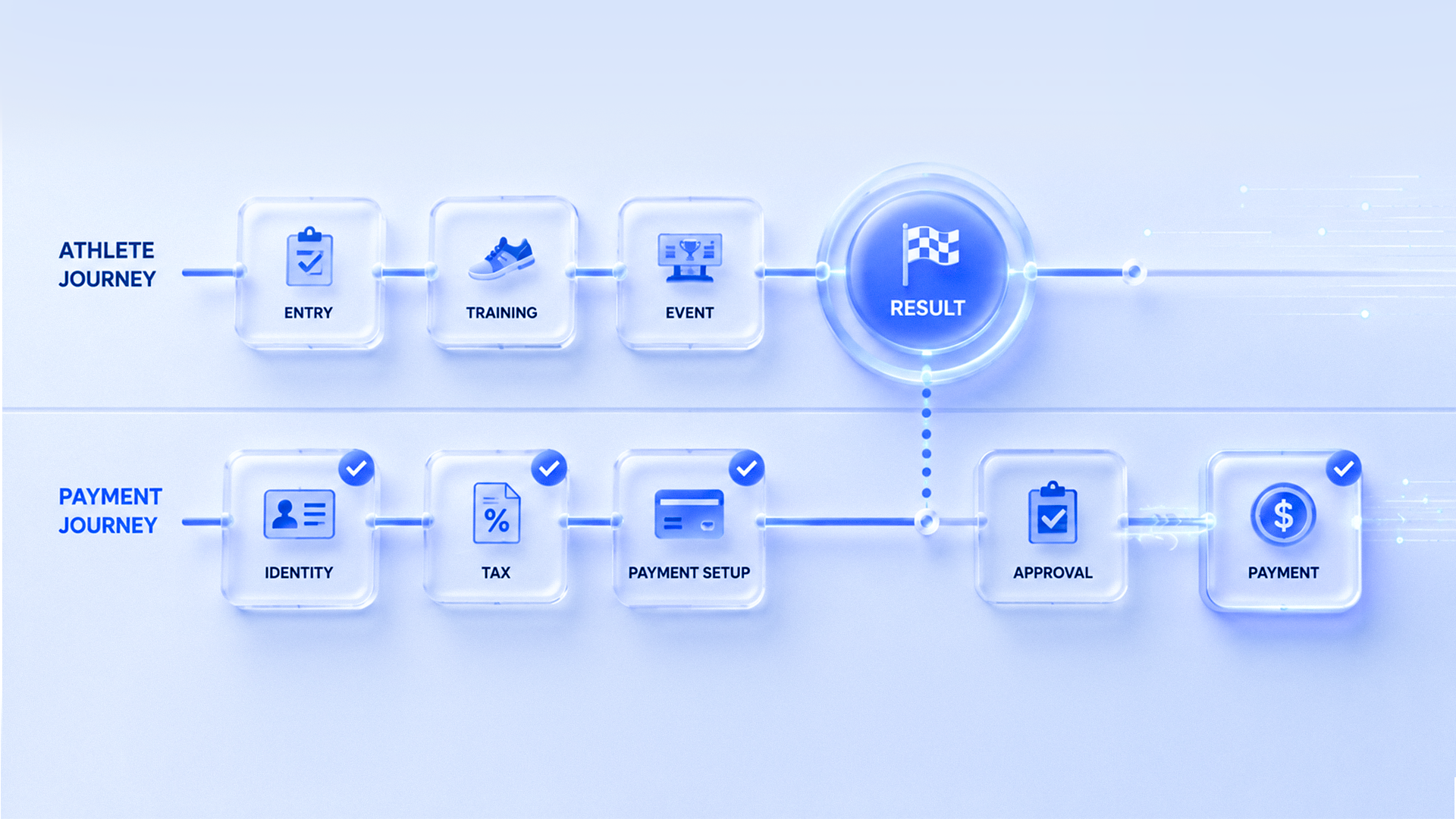
1. Onboard customers, merchants, or payees - collect the information needed to understand who you are doing business with. This may include legal name, address, date of birth, business name, tax ID, payment method details, country of residence, and supporting documents.
2. Verify identity and business information - use KYC and KYB processes to confirm that individuals and businesses are legitimate. This reduces the risk of sending money to fake accounts, sanctioned individuals, fraudulent merchants, or misrepresented businesses.
3. Screen against sanctions and watchlists - before processing payments, screen payees against applicable OFAC sanctions lists and high-risk jurisdiction rules. For cross-border payouts, this includes both the payee and the destination country.
4. Monitor transactions - payment fraud prevention and detection starts with transaction monitoring. Red flags include sudden volume spikes, repeated failed payment attempts, unusually large payouts, rapid movement of funds across accounts without clear business purpose, account information that does not match payee records on file, or activity involving high-risk regions.
5. Resolve exceptions before funds move - when a payment is flagged, the business should have a clear process for collecting missing information, reviewing documentation, escalating the case, and communicating payout status to the payee.
6. Maintain records - keep records of onboarding information, verification results, payment history, risk reviews, processor requests, and customer communications. Good recordkeeping helps businesses respond faster to audits, processor reviews, chargeback disputes, and compliance questions.
7. Review and improve the workflow - compliance is not a one-time setup. As your business adds new countries, payment methods, customer types, or payout programs, your controls should evolve. Review your payment compliance workflow regularly to make sure it still matches your risk profile.
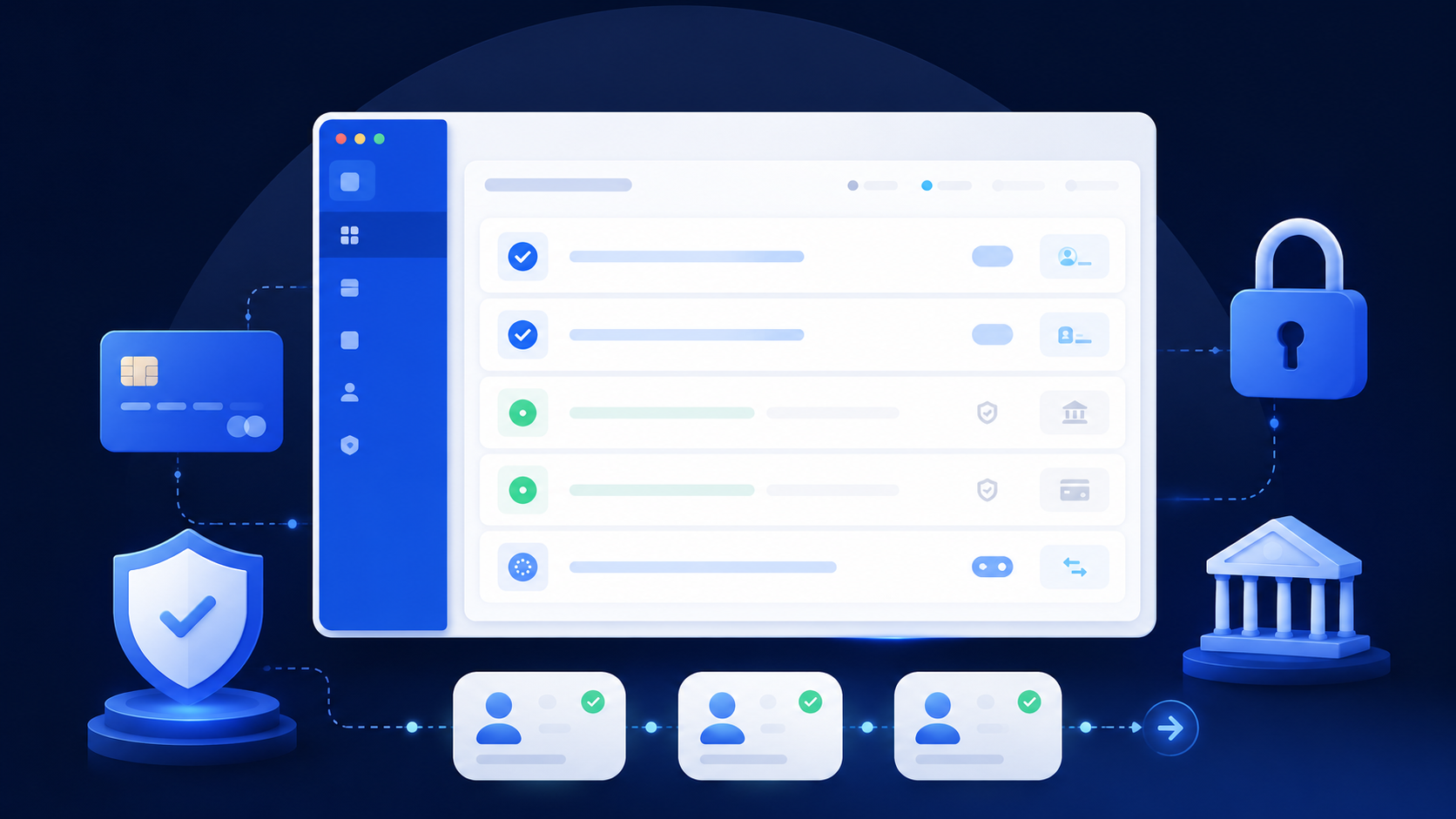
Payment Labs helps businesses manage this workflow through automated payee onboarding, identity verification support, transaction monitoring, payment tracking, and compliant payout infrastructure for global teams, creators, contractors, sports organizations, and esports platforms.
Common compliance mistakes that lead to frozen accounts
Account freezes typically happen when payment providers cannot verify your business, understand transaction activity, or assess risk accurately.
1. Incomplete or outdated business information - missing or outdated business details can trigger reviews.
2. Sudden transaction spikes without context - unexpected increases in payment volume may appear suspicious.
3. Weak payee onboarding - missing identity, tax, or banking information can delay payouts.
4. Ignoring sanctions and high-risk jurisdiction checks - both domestic and cross-border payments may require additional screening.
5. Poor transaction records - lack of documentation slows compliance reviews.
6. Using the wrong payment provider - not all providers support complex payout programs or international payments.
How to choose a compliant payment provider
The right payment provider should reduce compliance work for your team, not push more manual review into spreadsheets, email threads, and disconnected tools.
For simple online sales, a standard payment processor may be enough. But if your business sends payouts to creators, contractors, tournament winners, affiliates, vendors, or international payees, you need a provider built for domestic and cross-border payments, not just basic payment processing compliance.
Look for a provider that can support:
A compliant payment provider should understand how your business actually moves money. For payout-heavy businesses, that means supporting onboarding, verification, monitoring, payout delivery, exception handling, and recordkeeping in one workflow.
Payment Labs approach to payment compliance
Payment Labs helps businesses manage compliant payins and payouts without building a payment operations stack from scratch.
Our clients in sports, esports, the creator economy, and other industries make and receive compliant payments to and from 180+ countries, which is proving to be an important differentiator for them. Payment Labs is SOC 2 Type II certified and ensures secure transactions and tax-ready reporting in all major jurisdiction. Whether you work with contractors, athletes, prize money winners, gig workers, or content creators, the platform can pay anyone in a straightforward and compliant way, allowing you to focus on business development instead of regulations.
Payment Labs helps teams:
- collect payee information during onboarding
- support KYC, KYB, and tax documentation workflows
- screen and monitor transactions
- manage payout approvals and exceptions
- track payment status across payees and countries
- reduce manual work for finance and operations teams
- support compliant payments in 180+ countries
For an esports organization, that may mean paying tournament winners internationally after a major event. For a creator platform, it may mean paying talent across the U.S. and EU without chasing missing tax or banking information at the last minute. For a contractor network, it may mean applying additional review to higher-risk jurisdictions while keeping lower-risk payouts moving.
For finance and operations teams, this means fewer manual checks, clearer payout status, and less time spent chasing missing payee information.
Build a more compliant payment workflow
Payment compliance is not only about avoiding penalties. It is about building a payment operation that can scale without unnecessary payout delays, account freezes, or manual work.
If your business manages cross-border payments, contractor payouts, creator payments, sports or esports prize payouts, royalties, or marketplace transactions, Payment Labs can help you build compliant payment infrastructure for both payins and payouts.
Schedule a call with Payment Labs to see how your business can simplify global payments while reducing operational and compliance burden.